The short answer
Open the left arm of any pair of glasses and look on the inside. You will find something like 43□16–130, sometimes with dashes or spaces instead of the little square. Three numbers, always in that order, always in millimeters:
- 43 — the lens width. Straight across one lens at its widest point. Not both lenses, and not the frame.
- 16 — the bridge. The gap between the two lenses, which is roughly the part that sits over the nose.
- 130 — the temple length. The arm, measured along its whole length including the bend that goes behind the ear.
What is missing is the width of the frame itself. Add the two lenses and the bridge together and you still have not got it, because that ignores the rims and the endpieces — and those vary more between frames than anything else on the list.
Where to find them
Inside the left arm, most of the time. If it is not there, check the inside of the right arm, then the back of the bridge between the lenses. On very small frames the printing is sometimes on the outside of the arm near the hinge, and on wire frames it is occasionally laser-etched and almost invisible until you tilt it against the light.
A fourth number sometimes appears after the temple length, or on a second line. That is the lens height, and it matters for varifocals and for deciding whether a frame will sit on the cheeks. It is not part of the standard three.
A size chart that is a real stock list
Most size charts you will find are generic. This one is every frame we sell, grouped by the size band it belongs to. It is worth reading for what it shows about the numbers as much as for the numbers themselves.
| Size | Usually | A · lens | B · bridge | C · temple | Front width |
|---|---|---|---|---|---|
| Toddler | usually 2 to 4 | 39–41 | 15–16 | 122–130 | 110–115mm |
| Little Kid | usually 4 to 6 | 43–45 | 16–17 | 130 | 121–123mm |
| Big Kid | usually 6 to 8 | 44–47 | 16–18 | 130–140 | 120–127mm |
| Tween | usually 8 to 10 | 46 | 18–19 | 140–145 | 124–131mm |
| Teen | usually 10 and up | 48 | 19 | 145 | 128–135mm |
Adult frames run larger on every column — lens widths of roughly 48 to 58mm, bridges of 16 to 21mm, temples of 135 to 150mm. The relationship between the columns does not change with age, and neither does the problem with them.
Look down the lens column. A 45mm lens appears in 2 different size bands — Little Kid, Big Kid — which is a span of several years of childhood. If the first number were a size, that could not happen.
Two of our own frames carry the same marking and are 7mm apart
This is the part that is hard to believe until you see it on frames you can go and buy. We measure the front width of everything we sell and publish it per frame, which almost nobody in this industry does, so we can show this rather than assert it.
| Stamped inside the arm | These frames | Actually measure | Apart |
|---|---|---|---|
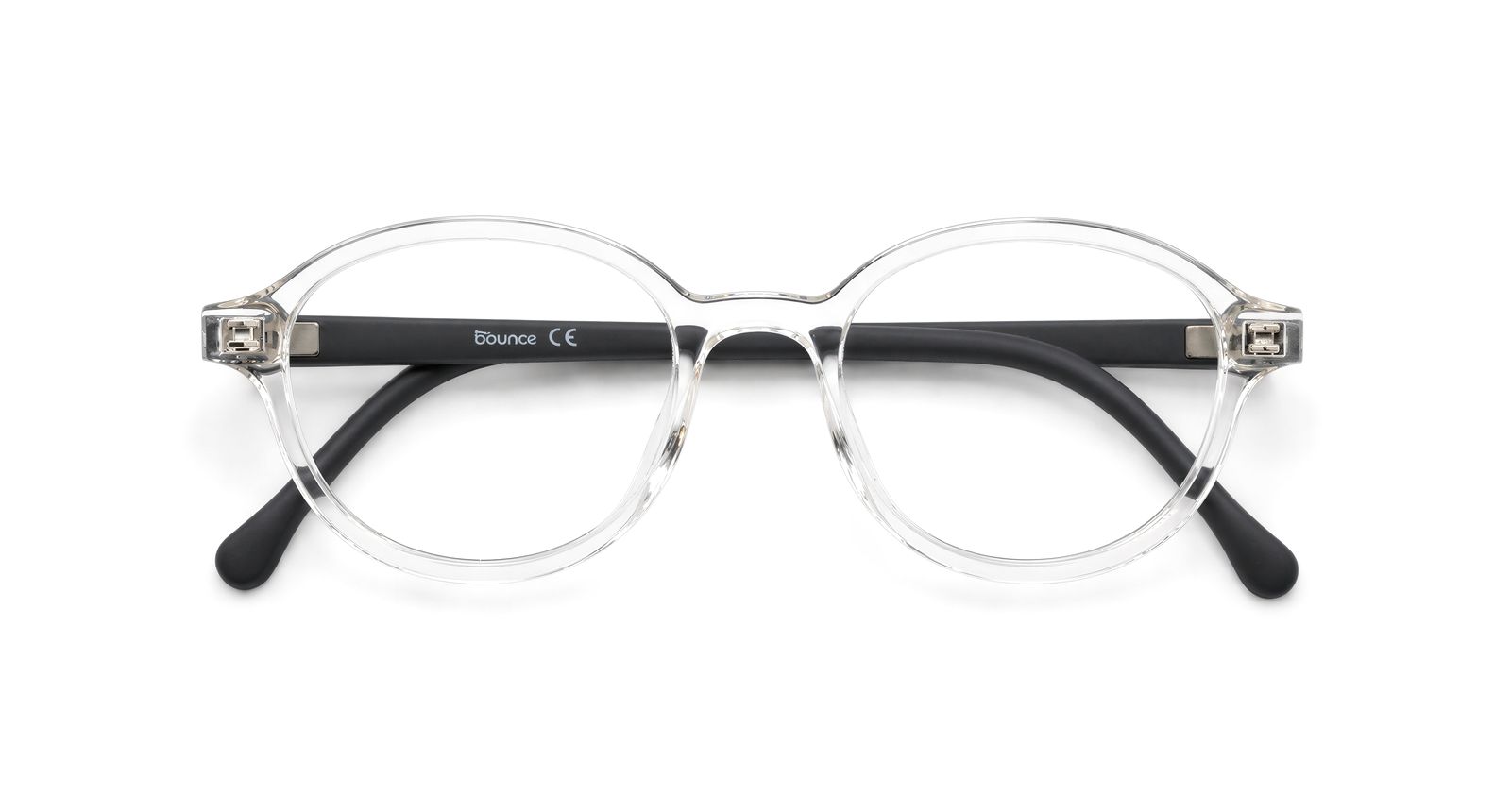
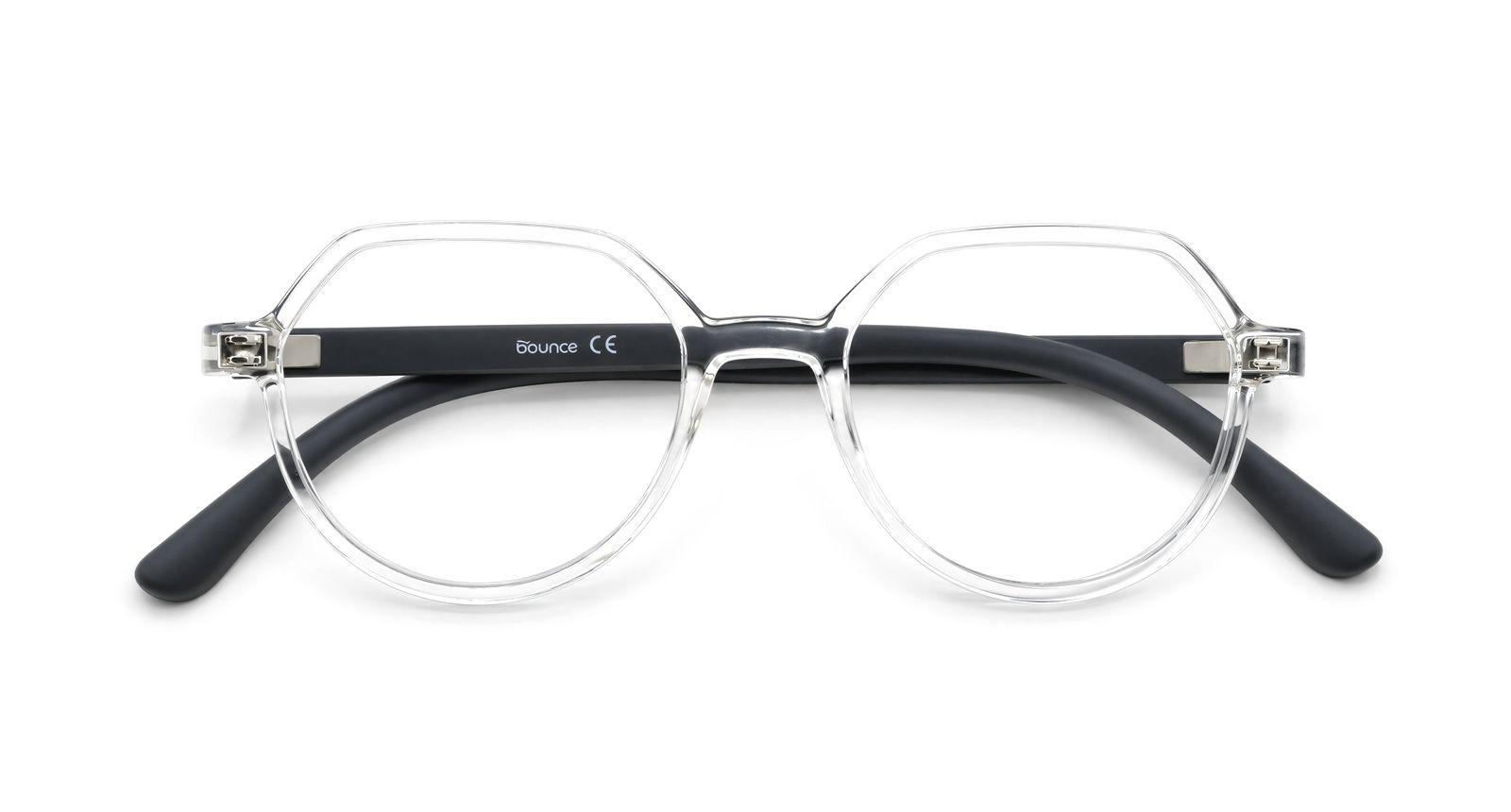
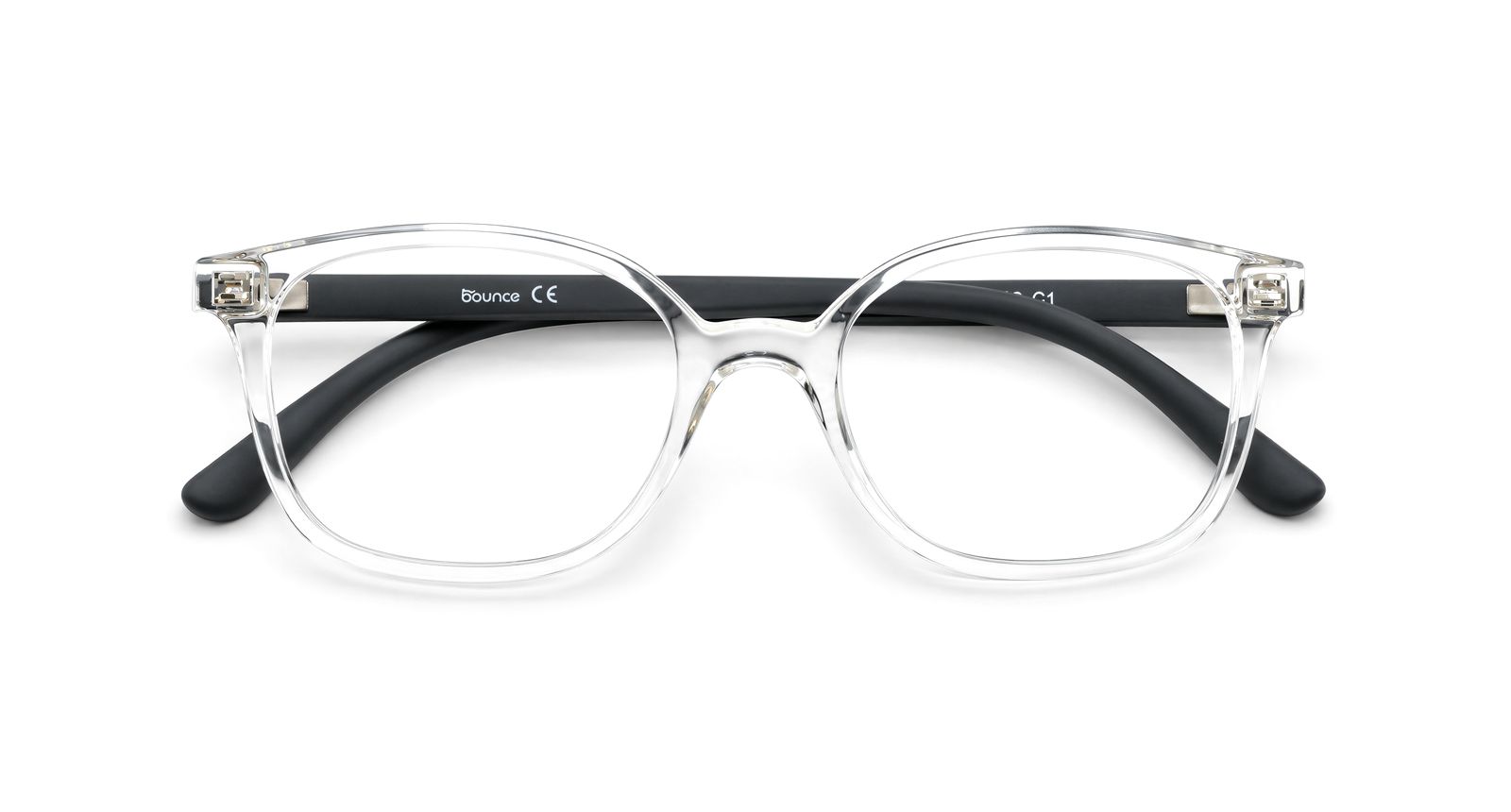
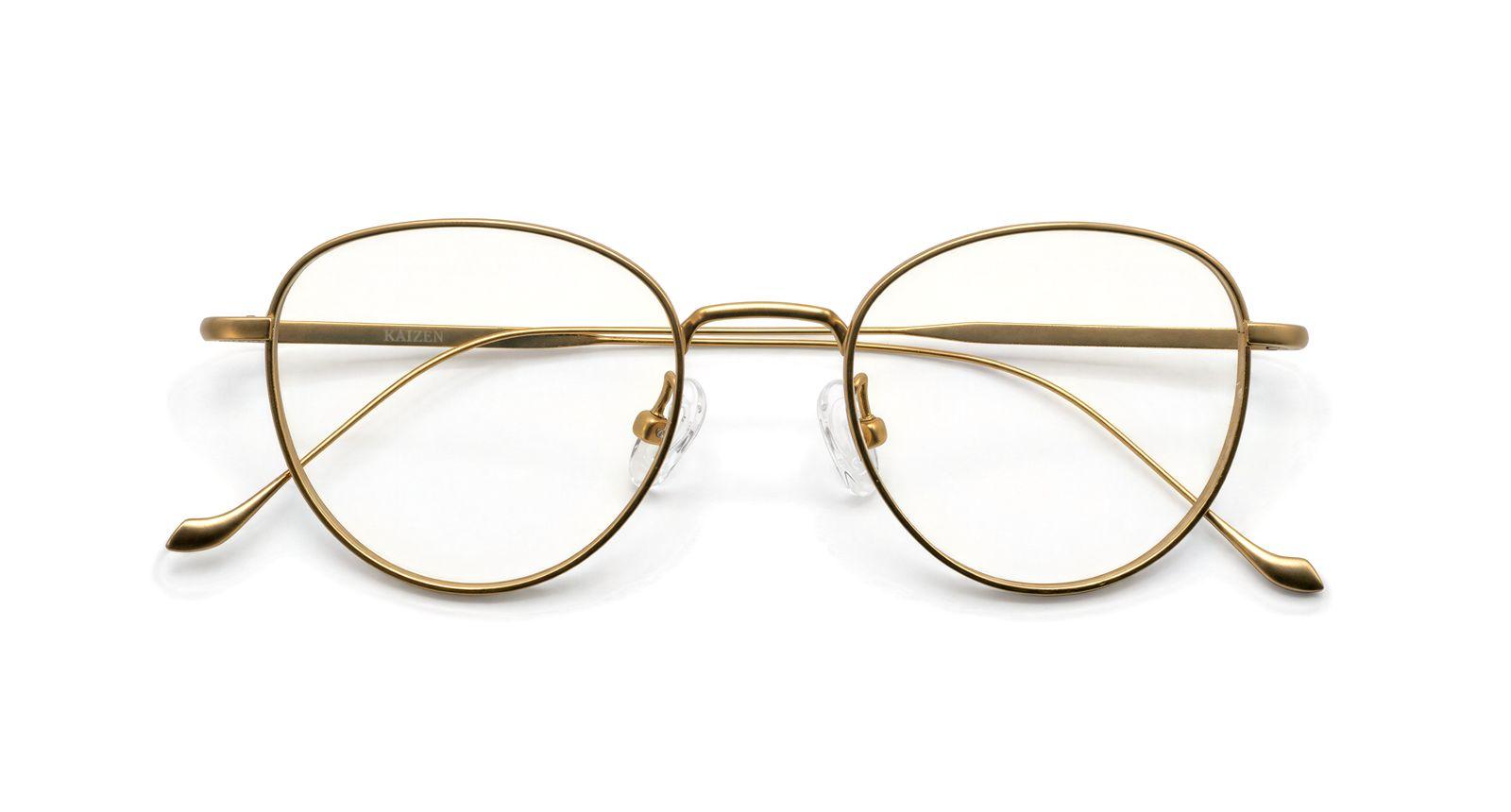
| 48–19–145 | Nord Teen and Kaizen Teen | 128mm and 135mm | 7mm |
| 45–17–130 | Prism Little Kid and Robin Big Kid | 122mm and 124mm | 2mm |
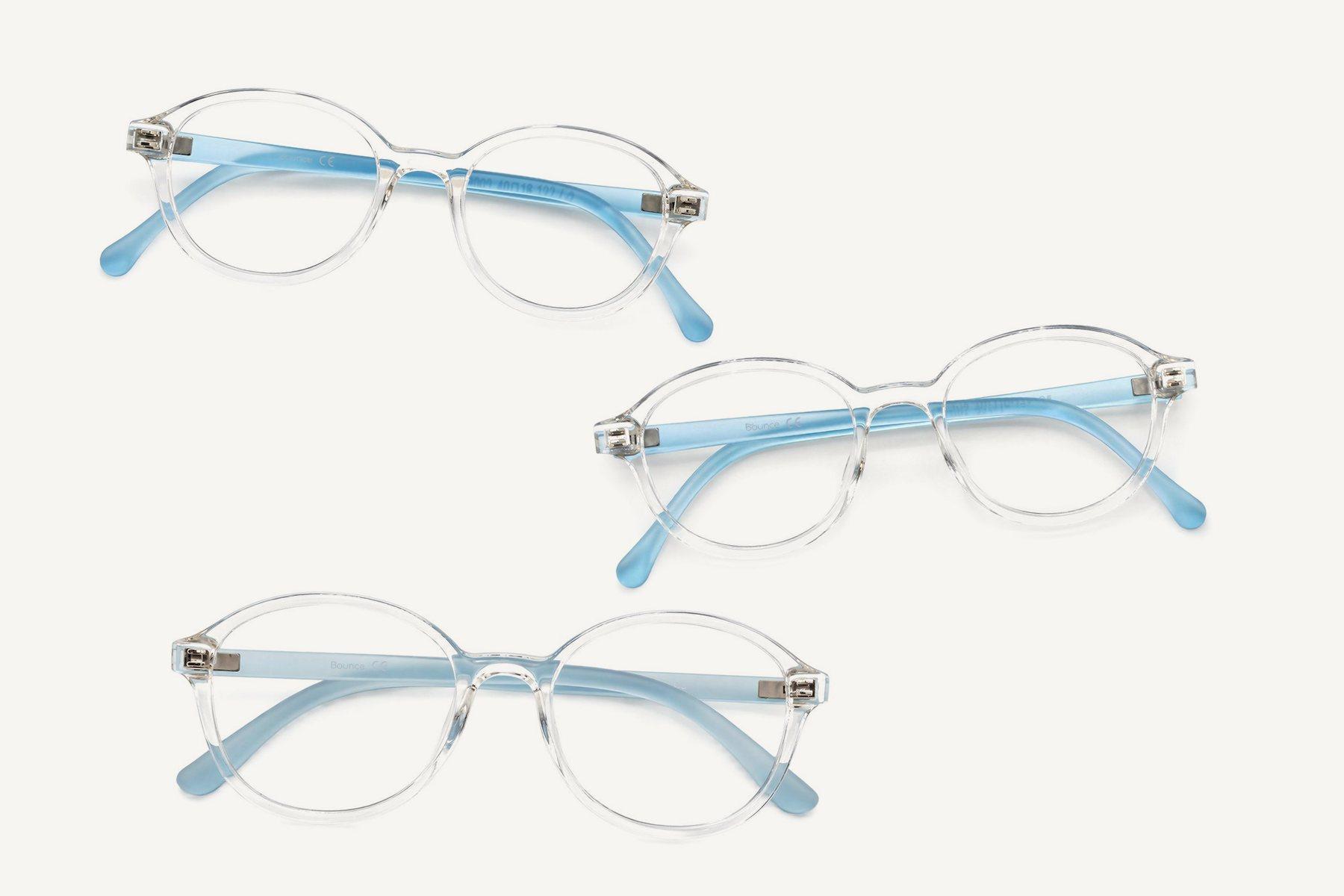
Nord Teen and Kaizen Teen are stamped with identical numbers. One is 7mm wider across the front than the other, because it has thicker rims and deeper endpieces. On a child that is not a rounding error — it is the difference between a frame that sits on the face and one that slides down it all day.
The same thing happens in reverse. Robin Big Kid and Nord Tween are all exactly 124mm across the front — genuinely the same size — and they advertise themselves with 2 different markings. A parent comparing those numbers across four listings would conclude they were looking at four different sizes. They are looking at one.
Front width, outer edge to outer edge.
The whole distance across the front of the frame at its widest point, including the rims and the endpieces. It is the number that governs how big the frame looks and whether it sits on the face, and no manufacturer stamps it inside the arm.
Ours run from 110mm to 135mm, and every frame is named for its own — Robin Toddler Small is 110mm across the front, and that is not a coincidence or a model number. It is the measurement, in the name, so that matching a frame to a face is arithmetic.
There is a second number, and it is not printed either
Front width decides how the frame looks. Temple clearance decides how it feels: the clear gap between the inside faces of the two arms, just behind the hinges, with the arms open. That is the space the head actually has to fit inside.
It is why two frames of the same front width can feel completely different, and why a frame can look correct straight on and still leave red marks behind the ears by mid-afternoon. Ours run from 100mm to 130mm and are on every product page, though we are straighter about this one than about the front width: it is measured with calipers on our TR-90 line and derived from the front width on the metal ones, and the pages that say so are marked. A borrowed figure is still more than anybody else prints, but it is not the same as having put a gauge on it.
How to measure front width yourself
You need a ruler with millimeters on it and a pair of glasses that already fit — yours or anyone’s.
- Fold the arms in and lay the frame face down on a table.
- Lay the ruler across the front at the widest point, which on most frames is level with the hinges rather than the middle of the lenses.
- Read the distance from the far left outer edge to the far right outer edge. Include everything — rims, endpieces, any decoration that sticks out.
- Write it down. That number, not the stamped one, is what to shop with.
Most children’s frames land between 105 and 135mm. If you measure a pair that has always been too big and a pair that has always been comfortable, the gap between them is usually smaller than you would guess — frequently under 10mm.
Why this matters more for a child
An adult buying a frame a few millimeters too wide has bought a frame that is slightly loose. A young child has bought a frame that slides down the nose, sits with the eye above the middle of the lens, and gets pushed up two hundred times a day until they give up and look over the top of it — which undoes the prescription it was bought for.
And children’s ranges are where the stamped numbers mislead most, because the rim thicknesses vary most. A chunky acetate toddler frame and a thin metal one can share a marking and be a size band apart.
If you want the whole argument about what happens next, it is in why your glasses keep slipping.
What we would do
Use the stamped numbers for what they are actually good for: ordering a replacement of a frame you already own and liked, or checking that a lens will fill a rim. They are precise and they are useful.
For deciding whether a frame will fit a face, measure the front width of a pair that already works and shop against that number instead — from us or from anyone who publishes theirs. If you would rather not measure anything at all, the size check works it out from a photograph in about a minute.