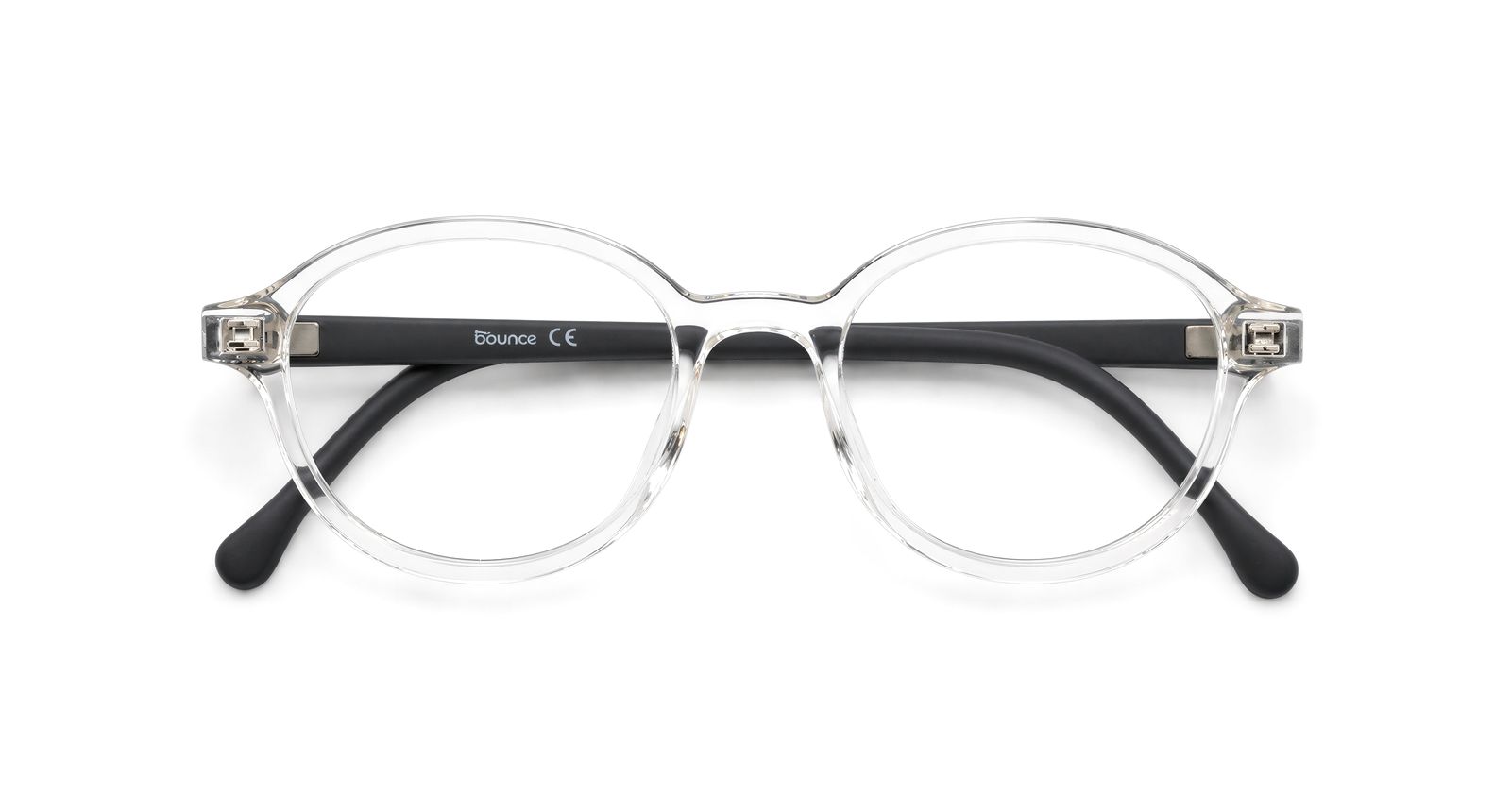
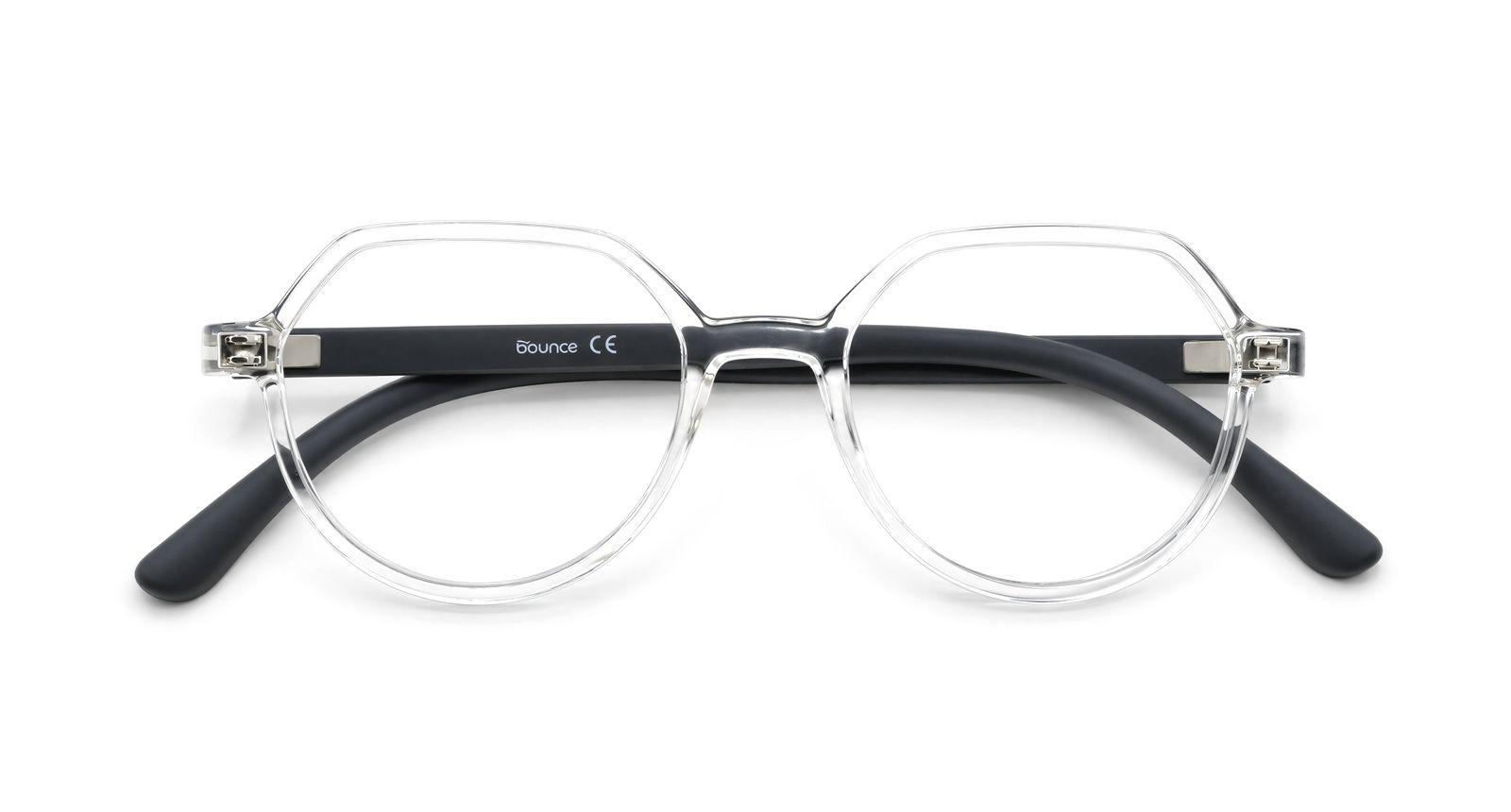
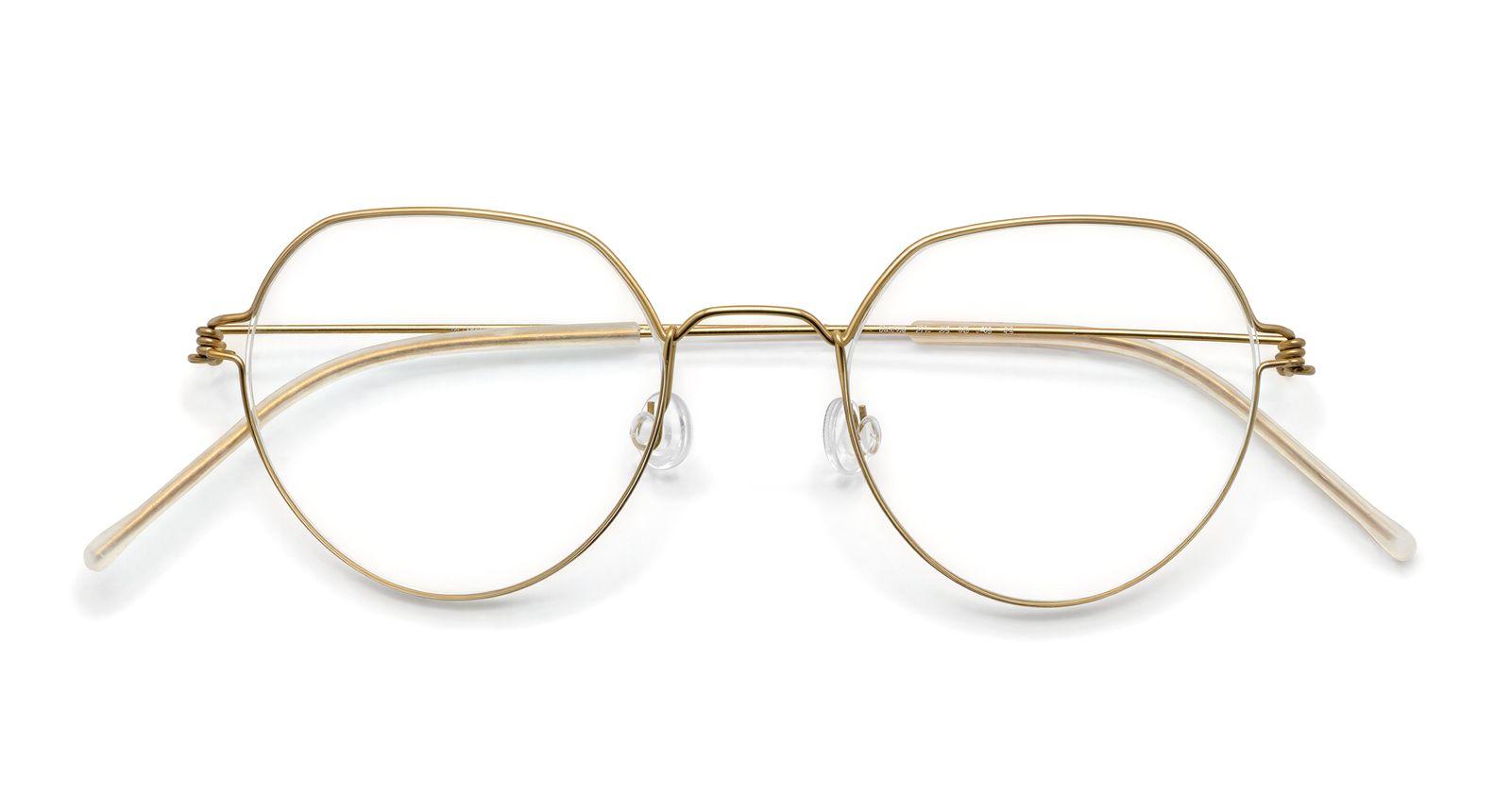
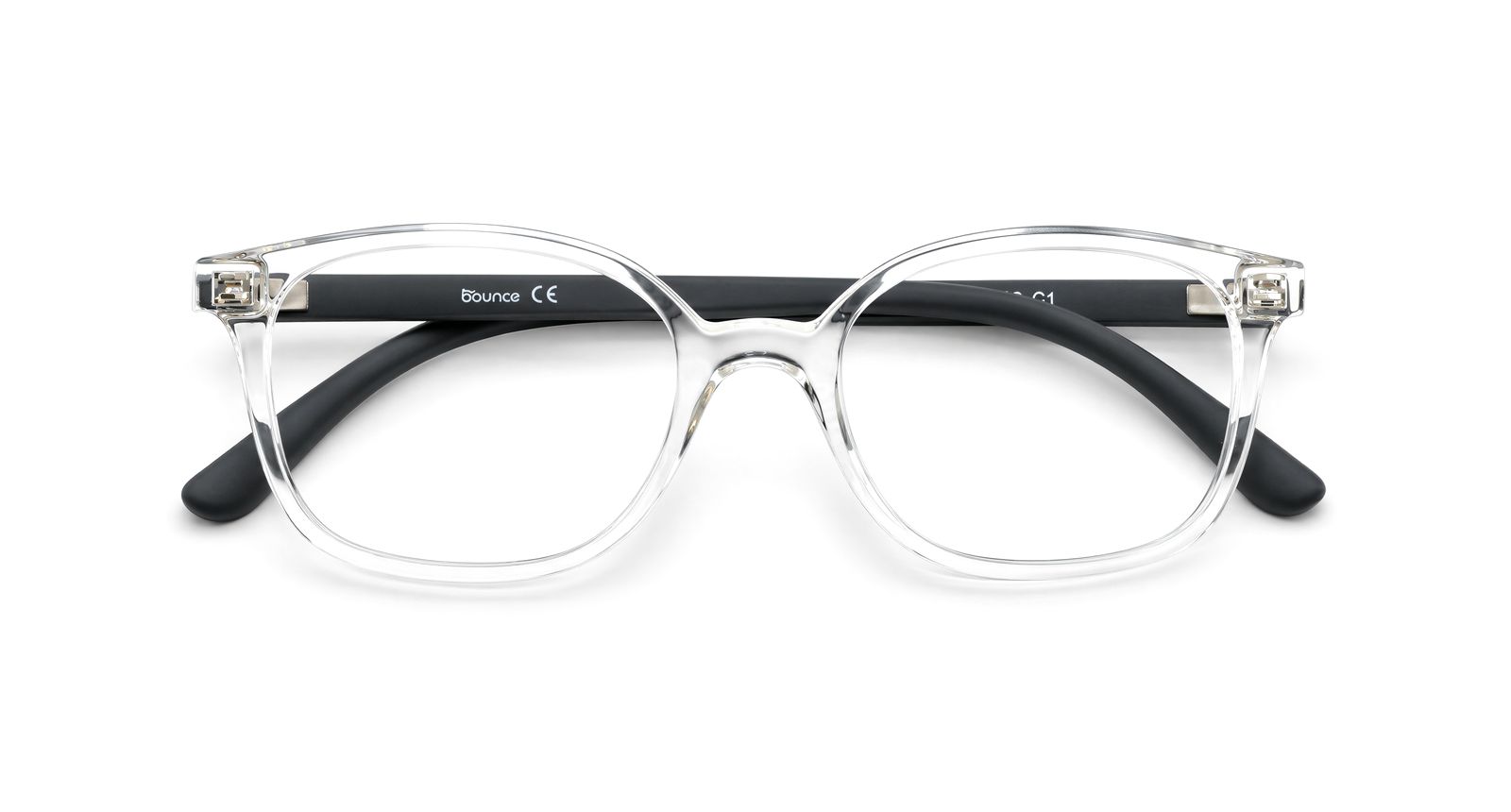
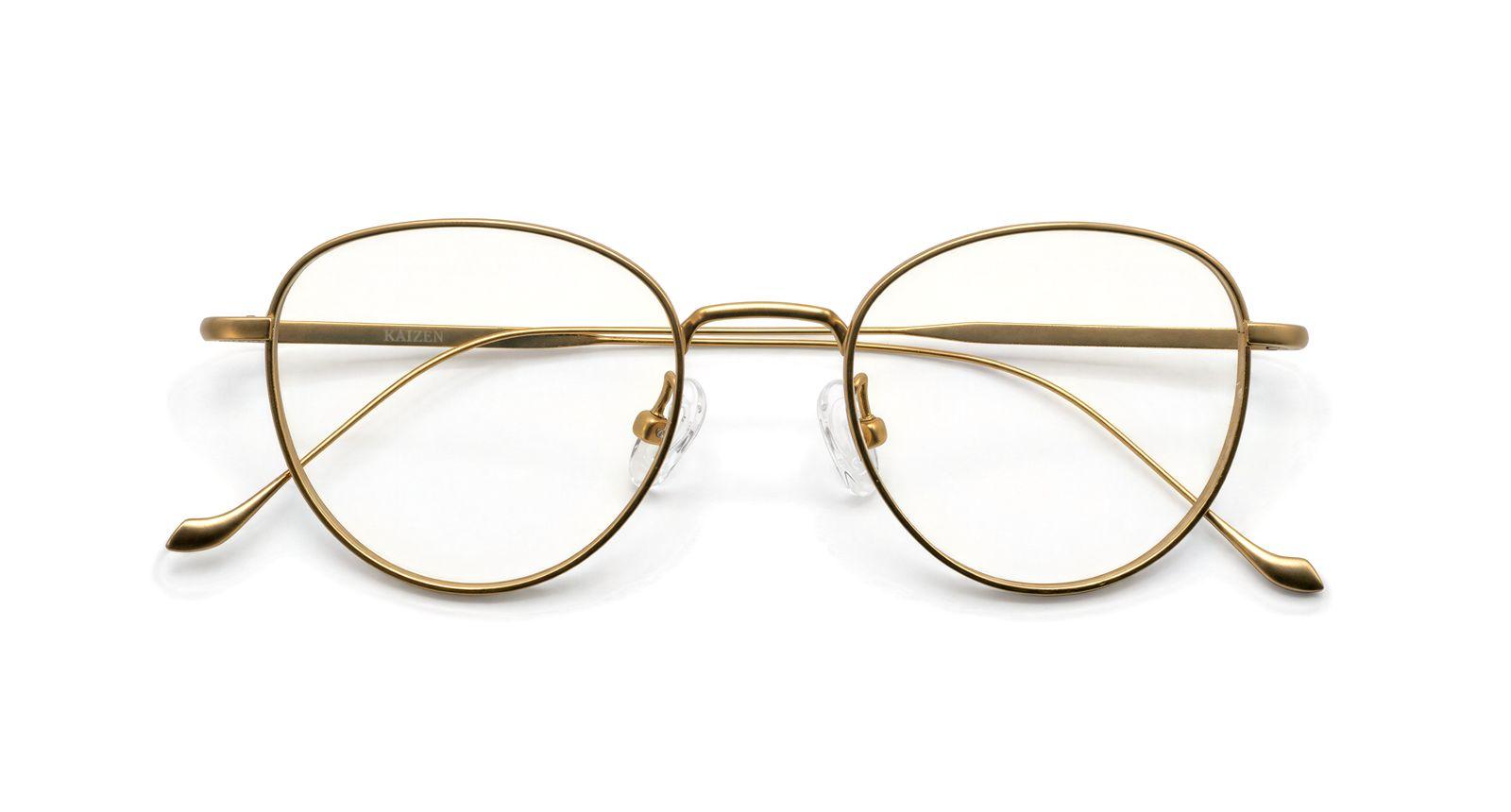
Toddler glasses
Every one of these bends a long way and comes back, because a rigid frame has no give and that is where children's glasses break. Usually ages 2 to 4 — a guide rather than a rule, since plenty of children sit a stage either side.
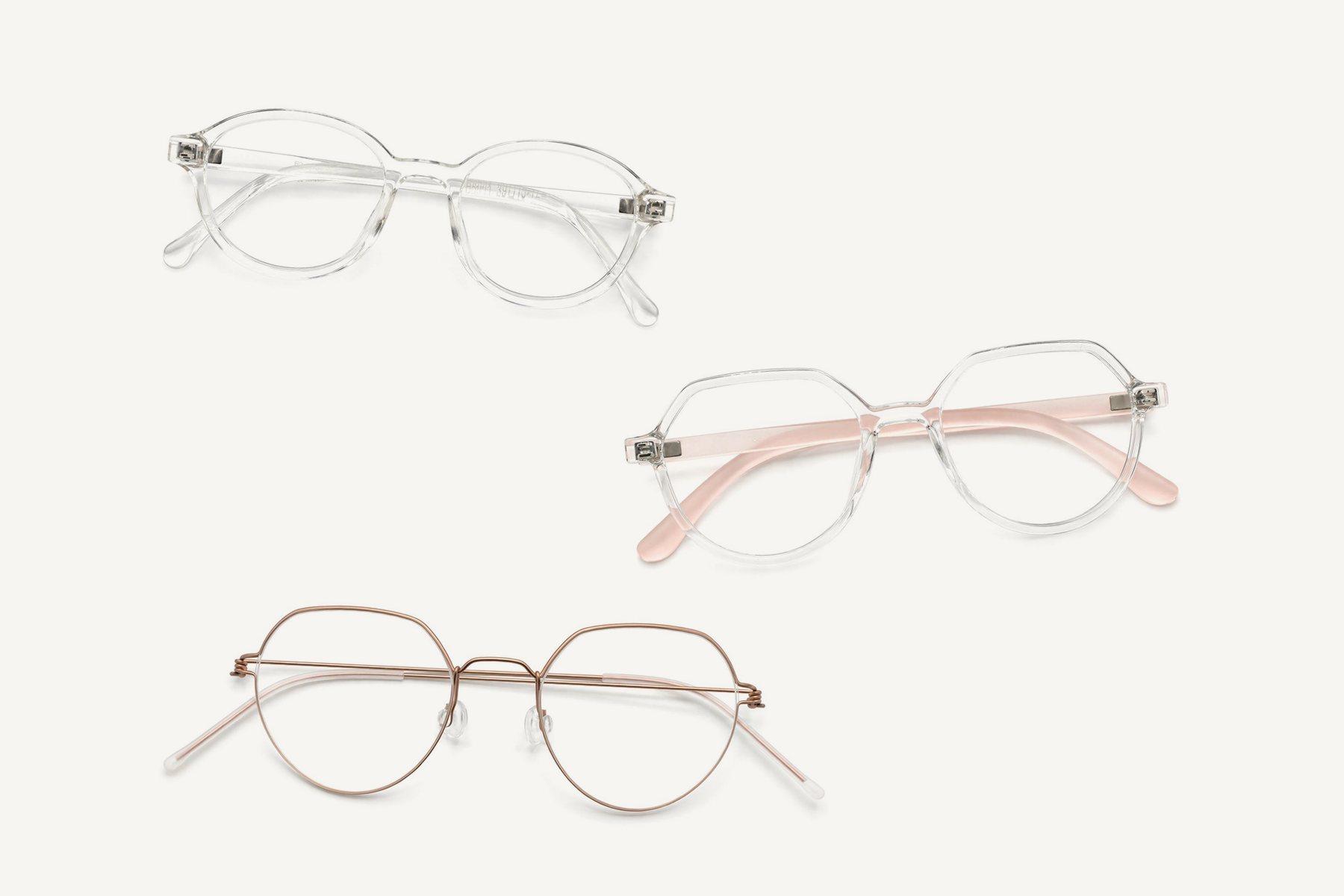
three frames from 110mm to 115mm across the front
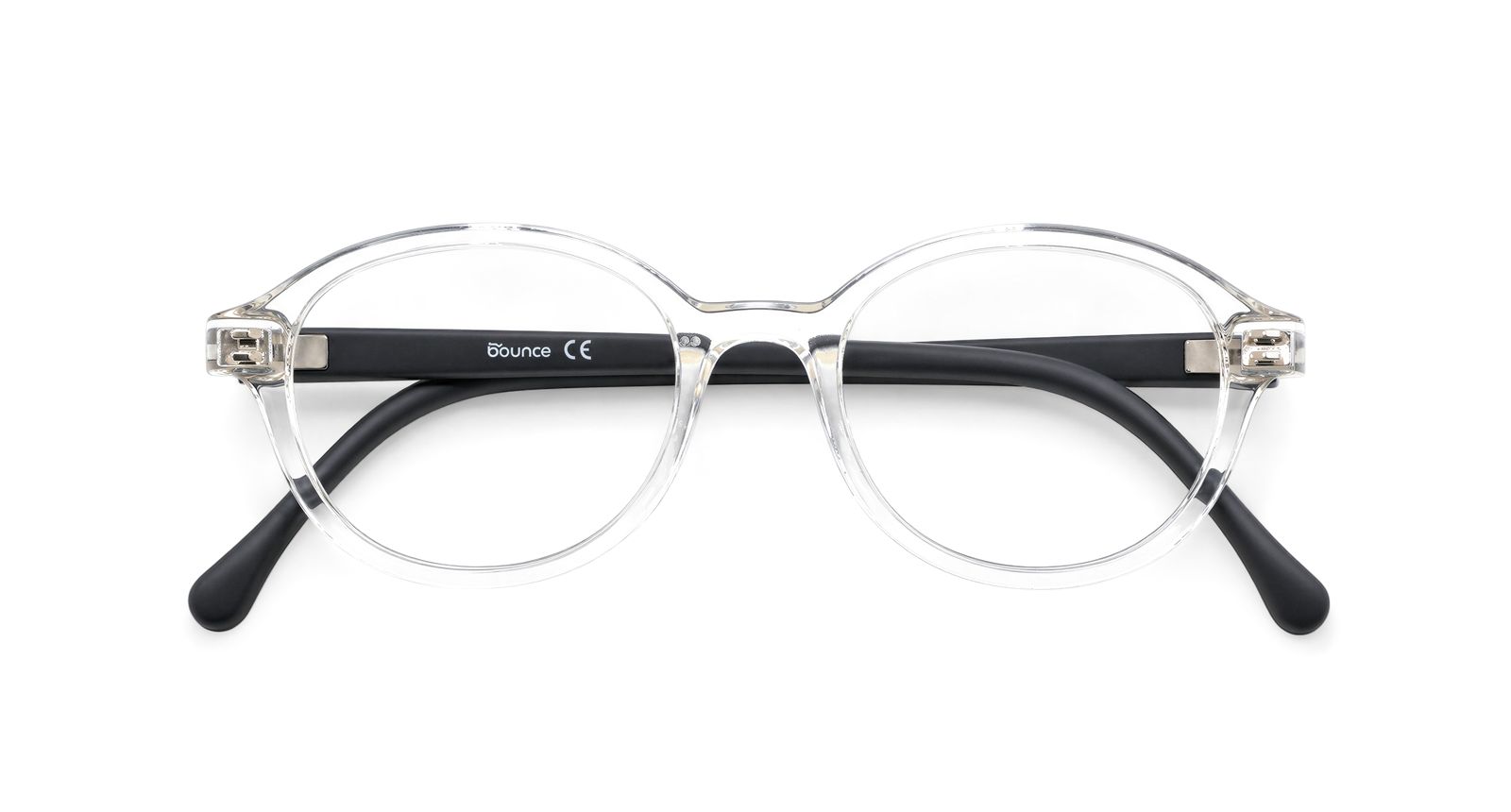
The first pair is usually the treatment, not an accessory
Most children this age are prescribed glasses for a squint or a weaker eye, and the glasses are how it gets corrected — the eye develops the way it is allowed to see. That is what makes a toddler's first pair different from anybody else's. Hours out of them are not neutral.
Which puts a lot of weight on whether they will actually stay on a face, and almost none on what they look like.
A two-year-old cannot tell you the frame hurts
They will just take them off. So the fit has to be checked by looking rather than asking: the edges level with the sides of the head, the eyes central in the lenses, the bottom rim clear of the cheeks when they smile, and no deep red marks either side of the nose after an hour.
A frame wider than the face slides down all day, and a child who cannot explain that solves it by pulling the glasses off. It gets read as defiance about twice as often as it gets read as a measurement.
Why these are the narrowest we make
A toddler's nose bridge has barely formed, so almost nothing is holding the frame up at the front — the width across the temples is doing the work. Get that wrong and no strap, wax or silicone pad fixes it.
These start at 110mm across the front, which suits a face around 108mm wide. Size them with the Focal app, and if that size turns out wrong, tell us inside 7 days and the next size up or down comes out with shipping paid both ways — one swap, which is all it should take at this age.
The things worth knowing before you choose a pair, written out properly.
- There is no best pair. There is the right size.Every best-of list is a shop listing its own products. Five things worth checking instead, in the order they actually matter — written so you can point them at us as easily as at anyone else.6 minute read
- How to fit children's glasses: the complete guide.One measurement decides whether a pair gets worn or ends up in a drawer, and it is not on the label. Measuring a child's face and PD, the four checks, the age table, and what does not matter at all.11 minute read
- Outgrown glasses do not slide down. They pinch.The opposite of slipping, and easier to miss because nothing falls off. Four checks for a frame that has become too small, how long a pair usually lasts at each age, and why a new prescription is not a new frame.5 minute read
- The numbers inside the arm are real. They will not tell you if the glasses fit.43□16-130 is a lens width, a bridge and an arm length — all true, none of them the size of the frame. What each number means, and the two of ours that share a marking and sit 8mm apart.8 minute read
- How to measure a child's PD, and when not to bother.Every glasses site has a PD ruler and none tells you how accurate yours needs to be. Why the mirror method fails on a young child, how to do it properly, and a calculator for whether your error actually matters.6 minute read
- The advertised price is rarely the price you pay.In this category the number on the frame is a frame price and the lenses are quoted later. Every number we charge, what is already inside it, and why cost per year is the measure that decides it.6 minute read
Not sure which size you are?
Three quick checks and we will mark the frames that fit.