1. The measurement that decides it
Front width — the whole distance across the frame, outer edge to outer edge, at its widest point. A frame wider than the face has nothing to grip: the arms bow outward instead of resting against the temples, the weight lands on a nose bridge that has barely developed, and it slides. You push it up, and push it up, and eventually stop pushing and look over the top — which undoes the prescription it was bought for.
A frame should be about as wide as the face, give or take. We build to face width plus 2mm, and the fit model treats a few millimeters either side of that as acceptable. Beyond it, nothing else you get right will save the pair.
2. The numbers on the frame will not tell you
Inside the arm you will find something like 43□16–130: lens width, bridge, arm length. All three are true measurements of parts of the frame, and none is the width of the frame. Add two lenses and a bridge and you still have not got it, because the rims and endpieces are not in the sum — and those are exactly what varies.
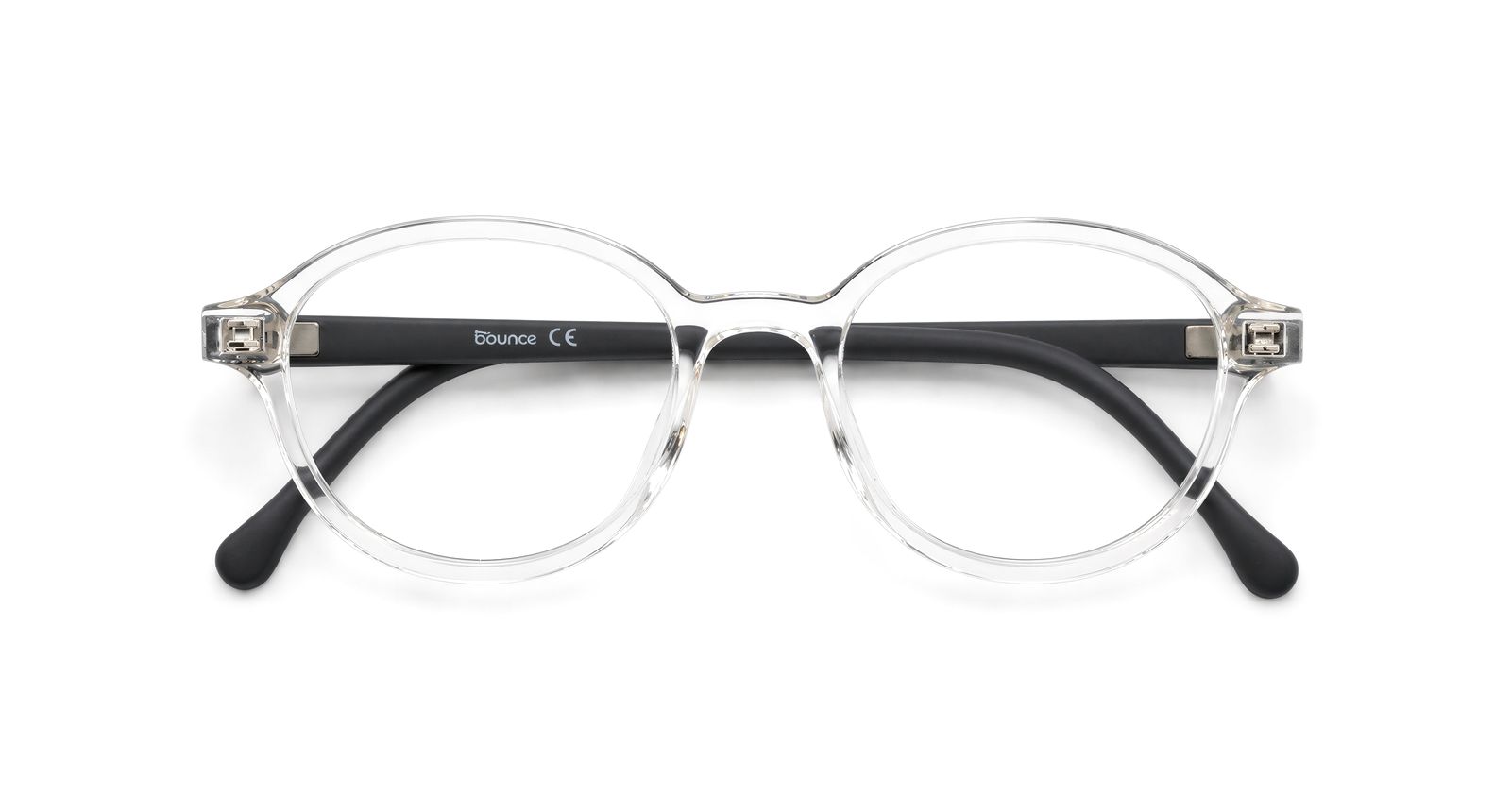
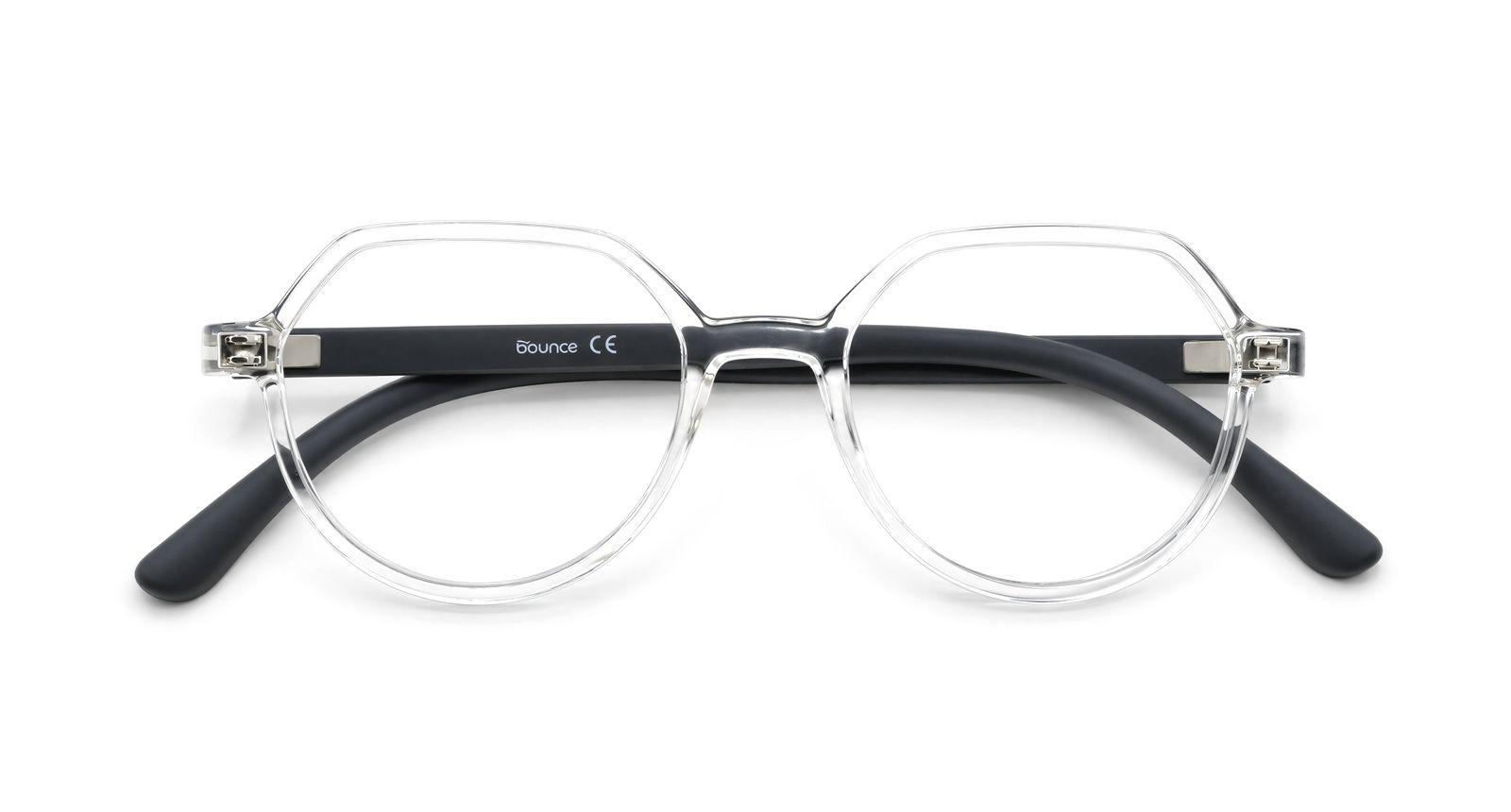
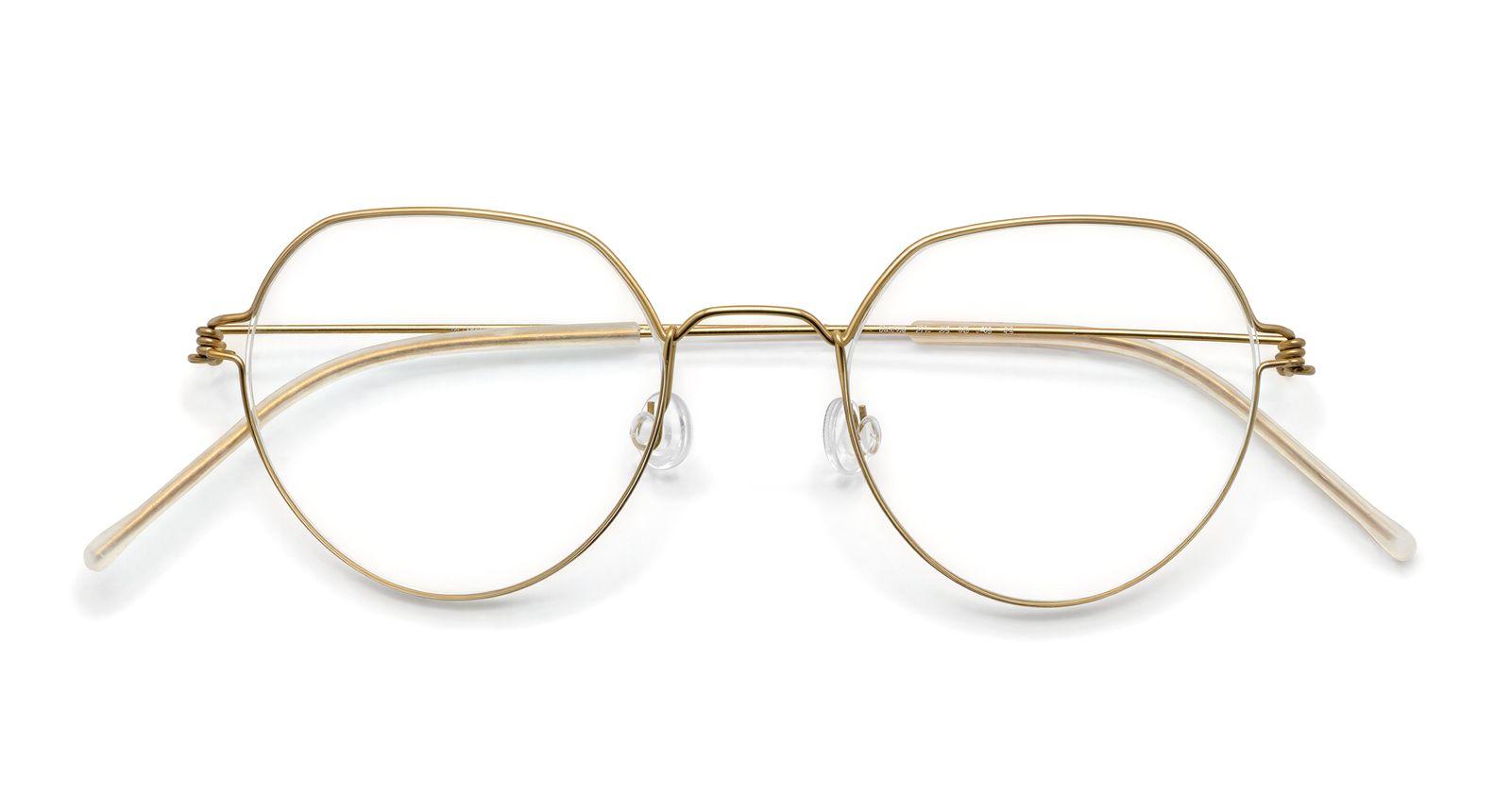
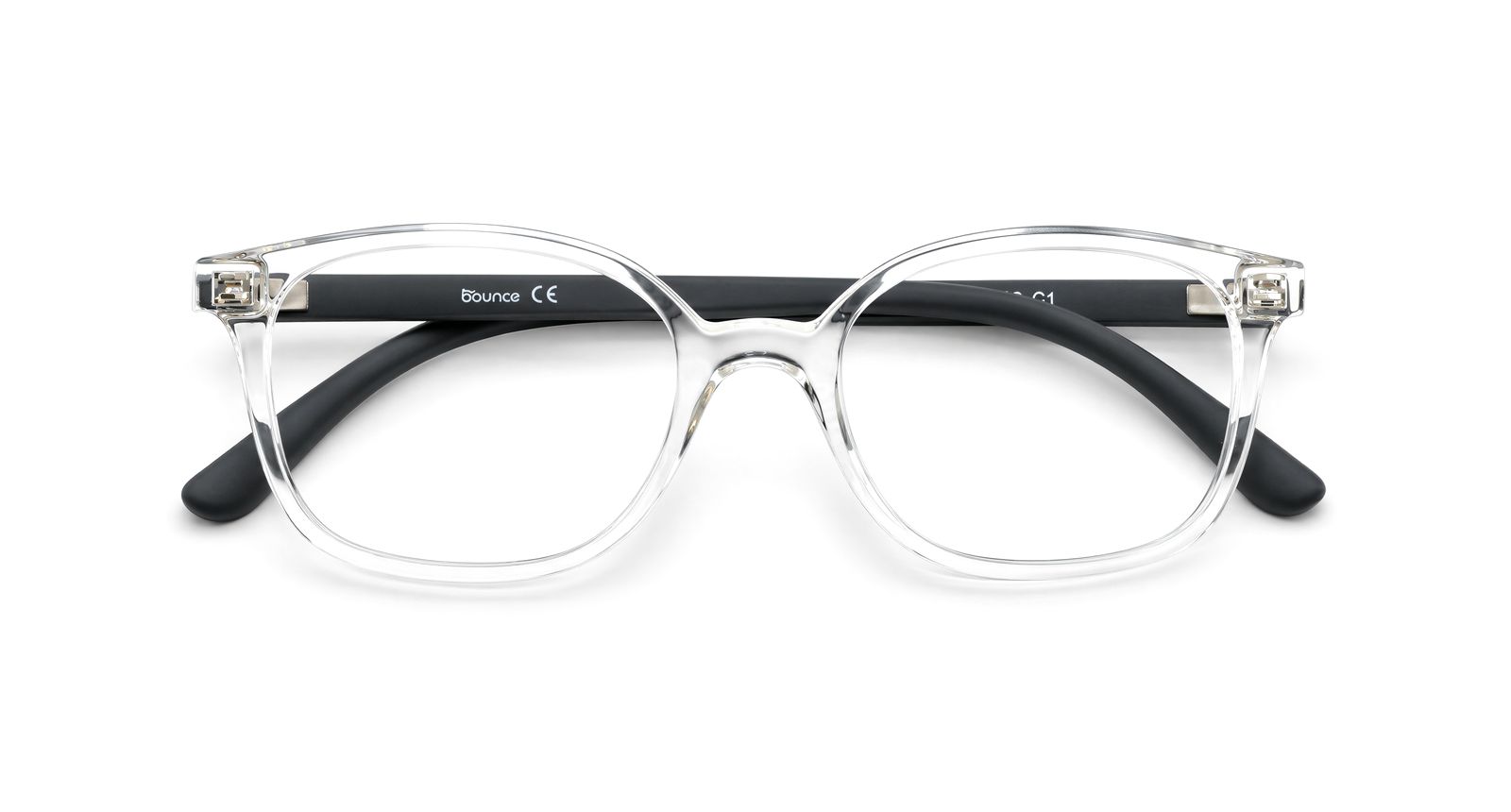
Our own range proves it. Two frames carry the identical marking and sit 8mm apart across the front. In the other direction, four frames at the same real width advertise four different markings. A parent comparing those listings would conclude they were four sizes.
What the numbers inside the arm actually mean has the full table, including which of ours collide.
3. Measuring your face
Face width. The distance across the head at the temples, just in front of the ears. A soft tape works; so does a ruler and a steady hand. Easier still: measure the front of a pair you already own and that already fits, because that number is the answer directly.
PD, or pupillary distance. The gap between the centers of the pupils, which decides where the optical center of each lens sits. Get it wrong and you look through the wrong part of the lens all day.
Ask for it rather than measuring it. It is usually written on the prescription and an optometrist has taken it properly. If you must do it yourself, do not use the mirror method that every guide describes — it needs the person to hold still and focus on their own eyes, which is not something a four-year-old does. Have somebody else hold the ruler while you look at an object across the room.
The full adult method, for when it is your own: how to measure your PD. Or the size check takes both from a photograph.
What a good fit looks like, in a minute.
- The frame edges line up with the sides of the head at the temples.
- The eyes sit in the middle of the lenses — middle, not high and inside.
- The bottom rim clears the cheeks when you smile. Children smile a lot.
- No deep red marks either side of the nose after an hour.
Two or more failing means the frame is the wrong size, and no accessory fixes it. Why they keep slipping covers what to do instead.
4. What does not matter
Face shape. The round-face-wants-angular-frames rules are a styling convention with no evidence behind them, and two charts from different sources will contradict each other about the same face. Use it to choose between frames that already fit, never to choose the frame.
The word “unbreakable”. No standard defines it. What is worth having is a frame that bends and returns, and a replacement policy you have read.
Brand size labels. One shop’s small is another’s medium. A millimeter is a millimeter.
5. Age is a starting point, not an answer
Parents shop by age because that is what they know, so here is the table — with the caveat that children vary either side of these by more than the gap between two of our sizes, and that the low end of it moved this month when a real fitting disagreed with the model.
Every year from 2 to 13 has its own page; the table shows alternate years for brevity.
6. The two edges of the range
Too small for us. Nothing we make fits a face below 80mm, which is roughly a two-year-old. Below that, buy from somebody who makes the size rather than sizing up — a frame that is too wide is not a lesser version of the right answer. The baby page says so and takes an email for when that changes.
Too small for adult shops. Adult frames mostly start around 135mm and go up, so an adult with a narrow face is often looking for the top of a children’s range without knowing it. Glasses for narrow and thin faces is the same problem from the other end.
7. Why we can tell you any of this
Because we measured it. Every frame in the range has been put under calipers — 14 of 14 now carry a measured temple clearance as well as a front width — and the numbers are published on each product page rather than kept in a size chart. They run from 110mm to 135mm across the front.
That is unusual and it is the whole reason this guide can be specific. Most shops cannot tell you a front width because they have never measured one, which is also why the advice elsewhere stops at the stamped numbers.
The method itself, the three ways it goes wrong, and the questions we still cannot answer are on how we measure a frame.
Everything, in more depth
- Outgrown glasses do not slide down. They pinch.The opposite of slipping, and easier to miss because nothing falls off. Four checks for a frame that has become too small, how long a pair usually lasts at each age, and why a new prescription is not a new frame.5 minute read
- What actually happens at a child's eye exam.Seven stages in the order they come, how they measure a child too young to read a letter, why the drops are used, and the three things to ask before you leave.7 minute read
- OD is the right eye. OS is the left.What every box on the prescription means, the three entries that mean something different on a child's, and which numbers you actually need to order a pair of glasses.6 minute read
- How to measure a child's PD, and when not to bother.Every glasses site has a PD ruler and none tells you how accurate yours needs to be. Why the mirror method fails on a young child, how to do it properly, and a calculator for whether your error actually matters.6 minute read
- How to measure sunglasses, and the number nobody prints.The same three stamped numbers as prescription glasses, telling you just as little. How to measure a pair properly — and why on sunglasses a frame that is too small lets light in rather than just looking small.5 minute read
- If every frame sits wide on you, it is a measurement rather than a preference.Adult frames mostly start around 135mm across the front. Below that the ranges simply do not go — which is why nothing has ever quite fitted, and why the frames that do come from a children's range.6 minute read
- Glasses for your face shape, and why it is the second question for a child.The round, oval and square chart, given straight — then the reason it does not decide anything on a child. A face shape does not make a frame slide down. A width does.5 minute read
- There is no best pair. There is the right size.Every best-of list is a shop listing its own products. Five things worth checking instead, in the order they actually matter — written so you can point them at us as easily as at anyone else.6 minute read
- The line is the smallest of the differences.A bifocal has two powers and a visible line; a progressive changes gradually and has none. What actually separates them is the middle distance — and on a child, which one you get is not usually your decision.5 minute read
- Ordinary glasses are not sports eyewear. Ours included.Polycarbonate lenses do not make a frame protective equipment, because certification tests the whole protector. Which sports need ASTM F803, and what an everyday pair is genuinely fine for.6 minute read
- The case that stayed at home has never protected anything.We do not sell cases. The case is not the variable — whether it is with the glasses is. Hard against soft, why the free one fails, and the two habits that beat buying anything.5 minute read
- Bendy is not the same as unbreakable.What people mean by rubber glasses, what a flexible frame actually buys you, and the point at which a hinge becomes the better answer — including the size below which we are not the right shop.5 minute read
- The advertised price is rarely the price you pay.In this category the number on the frame is a frame price and the lenses are quoted later. Every number we charge, what is already inside it, and why cost per year is the measure that decides it.6 minute read
- The best lens for a child is the one already in the price.Polycarbonate is the impact-resistant material and it is included. What every upgrade actually does, what each costs, and the honest case for skipping most of them.7 minute read
- What bends back, what springs back, and what snaps.Start with the screw. Then find out what the frame is made of, because half our range refuses to hold a bend at all — and learn when crooked glasses are a sizing problem rather than a bending one.6 minute read
- You cannot polish a scratch out of a lens.Toothpaste, baking soda and car polish are all abrasives, and on a coated lens they make it worse. What a scratch actually is, and the one thing that fixes it.5 minute read
- Most scratches on a child's lenses come from cleaning them.Not from dropping them — from being wiped on a shirt with grit still on the lens. The thirty-second method, what strips an anti-reflective coating, and why the cloth needs washing too.5 minute read
- We sell blue light lenses. The evidence for them is weak.The strongest review found they probably make little or no difference to eye strain. What actually causes the ache after a screen, and the one lens on our list with a real optical mechanism behind it.6 minute read
- Transition lenses do not work in the car, and that is not a fault.The most common complaint about photochromic lenses has a specific cause — a windscreen blocks the UV that triggers them. What the word means, how it differs from polarized, and the one version that works behind glass.6 minute read
- There is no such thing as unbreakable children's glasses.Every brand selling the word means something different by it and no standard defines it. What the words on a listing actually describe, which one is already the law, and the two that are worth anything.7 minute read
- The numbers inside the arm are real. They will not tell you if the glasses fit.43□16-130 is a lens width, a bridge and an arm length — all true, none of them the size of the frame. What each number means, and the two of ours that share a marking and sit 8mm apart.8 minute read
- Children's glasses break in the same three places.The hinge, the bridge, and the joint where the arm meets the front. Why a frame fails at those three points, why a spring hinge makes it worse, and the five habits that actually stop it.6 minute read
- Your glasses are not slipping. They are too big.The internet will sell you wax, silicone pads and ear hooks. All three are workarounds for a frame that is too wide, and none of them fix it.4 minute read
Common questions
- How do I know if my glasses fit?
- Look at them straight on. The frame edges should sit at about the width of the head at the temples, the eyes should sit in the middle of the lenses, the bottom rim should clear the cheeks when you smile, and there should be no deep red marks either side of the nose after an hour.
- What measurement should I use to buy children's glasses?
- The total width across the front of the frame, outer edge to outer edge. It is not the three numbers stamped inside the arm — those measure one lens, the bridge and the arm, and none of them tells you how wide the frame is.
- How do I measure my PD?
- Ask for it. It is usually on the prescription, and an optometrist has measured it properly. If you have to do it yourself, have someone else hold the ruler while you look at something far away — the mirror method most guides describe needs a stillness young children do not have.
- Does face shape matter when choosing children's glasses?
- Barely. Face-shape rules are a styling convention with no evidence behind them, and they contradict each other between sources. Width decides whether a pair is wearable; shape is a tiebreaker between frames that already fit.