The short answer
Every pair of glasses is a small structure that has to absorb force. When a child sits on them, folds them the wrong way, or pulls them off one-handed for the four hundredth time, that force has to go somewhere.
In a frame that flexes, it spreads out along the whole front and the frame springs back. In a frame that does not flex, it concentrates at the thinnest cross-section — and the three thinnest cross-sections in any pair of glasses are the hinge, the bridge, and the joint where the arm meets the front.
That is why breakages are so repetitive. Parents describe them as bad luck, and they arrive at the counter looking identical.
The three places, and what puts the load there
- The hinge. The most common by a distance. It is the smallest piece of the frame, it is the only part with moving components, and it is very often the point where two different materials meet — metal set into plastic. Joints between materials are where things come apart, and this one is asked to move several times a day for years.
- The bridge. The span across the nose is the narrowest part of the front. Pull a pair off by one arm and the whole front twists; the bridge is where that twist is tightest. This is why one-handed removal is the single most destructive habit a child has, and why it breaks frames that have survived being sat on.
- Where the arm meets the front. An arm is about 130mm long, which makes it a lever. Anything that catches it — a sweater coming off, a car door, a backpack strap — multiplies the force by the time it reaches that joint. The arm itself rarely snaps in the middle. It goes at the end.
Look at the last pair that broke. It will be one of those three, and knowing which one tells you what actually happened to them.
Why most children's frames have a spring in the hinge.
Spring hinges are sold as a feature, and parents reasonably read them as a sign a frame is built for children. The engineering runs the other way round.
A spring hinge is there to solve a problem the frame itself creates. A rigid front cannot give when a child pulls their glasses off one-handed or shoves them onto their head. Something has to absorb that, and if the frame will not, the give has to be built into a mechanism instead.
So the smallest part of the frame — the one already carrying the most work, already made of two materials meeting — is handed the job of being the flexible bit as well. It is a sensible answer to the wrong question, and it is why the hinge is the first thing to go.
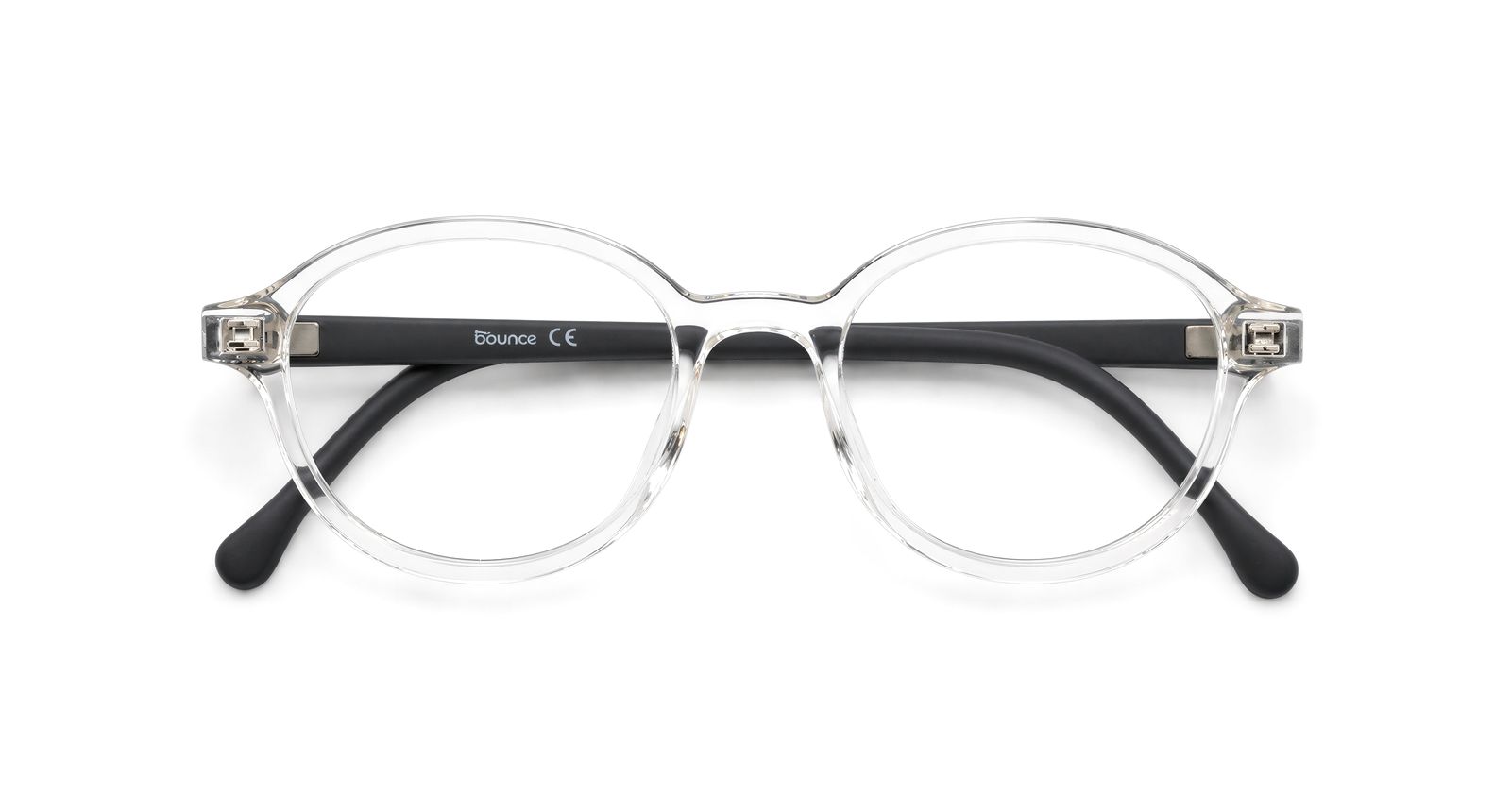
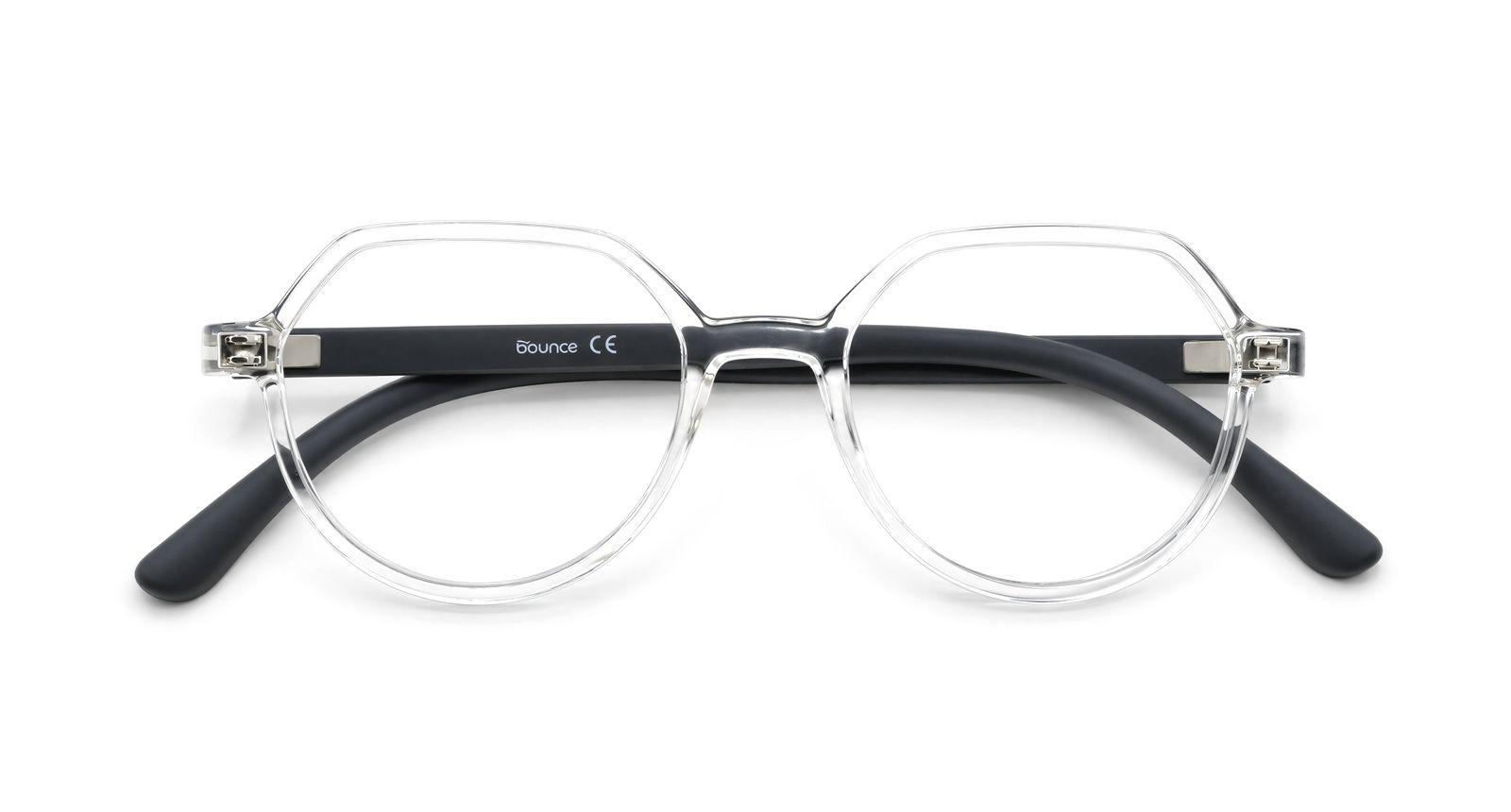
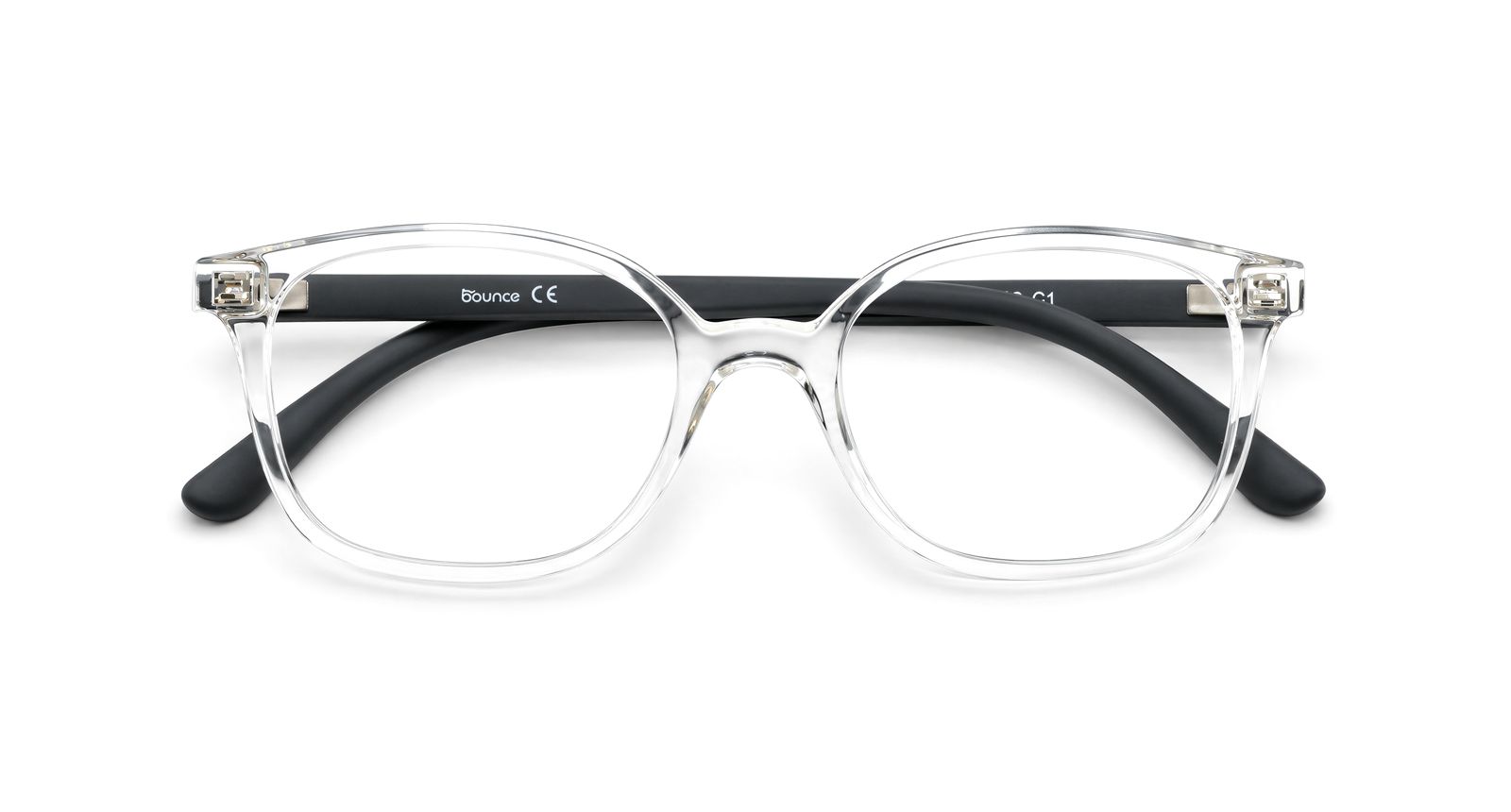
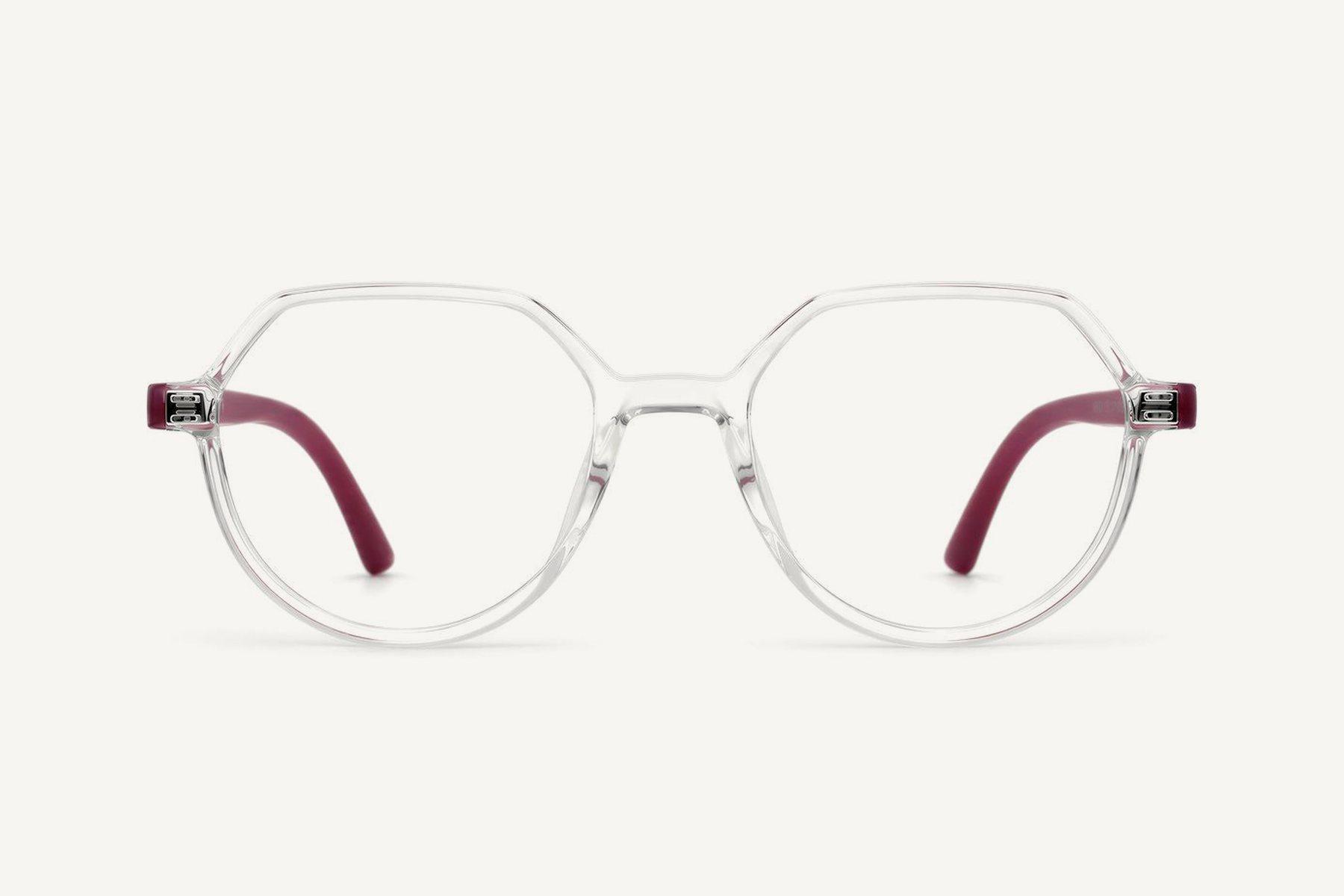
A frame that flexes across the whole front does not need that. The give is already in the frame, so the hinge can simply be a hinge: solid, and doing one job. That is the whole reason our Bounce line is made the way it is.
What actually breaks them
Ask a parent what happened and the answer is usually “I don’t know, they just came home like that.” But the same short list comes up again and again:
- Taken off with one hand. Not dramatic, but it happens ten times a day and it twists the front every single time.
- Slept in. Reading in bed, then not taking them off. A whole night of body weight in an unpredictable direction.
- Pushed up onto the head. A skull is wider than a face, so this springs the arms outward and slowly loosens everything.
- Loose in a bag. Not the drop that breaks them — the case that stayed at home.
- Sat on. The one everybody expects, and genuinely not the most common.
There is one more, and it is the quiet one: a frame that is too wide gets handled more. It slides, so it gets pushed up; it gets pushed up, so it gets grabbed; it gets grabbed, so it gets twisted. A pair that fits properly is touched far less often, which is a durability advantage before it is a comfort one. That is covered in the guide on slipping.
Five habits that genuinely help
None of these require buying anything, and the first one is worth more than the other four together.
- Two hands, every time. One hand on each arm, straight off the face. Start it in the first week, before a one-handed habit forms. It is the single highest-value thing you can do, and after two weeks nobody has to think about it.
- Off before bed, in the case. Somewhere fixed — a shelf, a bedside drawer. Same place every night, so it is a habit rather than a decision.
- Never on the head. Offer somewhere else for them to go, or the head wins by default.
- Check the screws once a month. A quarter-turn with a small screwdriver. A loose hinge screw lets the arm move where it should not, and that movement is what wears the joint out.
- Get them adjusted rather than bending them yourself. Warm plastic bends; cold plastic snaps, and it snaps at the joint you were trying to fix. Any optician will straighten a pair in a couple of minutes and almost nobody charges for it, including us, wherever you bought them.
If you are choosing a new pair
Two things are worth looking at, and neither is on the label.
How the front behaves when you flex it. Hold the frame and bend it gently. Some fronts flex and return; others resist and then give all at once. That behavior, not the marketing, tells you where the force will go when a seven-year-old applies it.
Whether the hinge is doing more than one job. If the front is rigid, the hinge is absorbing everything, and that is worth knowing before you buy rather than after it breaks.
Our flexible frames are built around the first of those. It is not the only good way to make a pair of children’s glasses, and we would rather you knew what to look for than took our word for it.
What we would do
Start the two-handed habit this week. Check the screws this month. Get the fit right, because a frame that fits gets handled less. Those three things will do more for how long a pair lasts than anything written on a box.
And then plan for it happening anyway, because sometimes it simply does. That is what the Unbreakable Vow is for: for twelve months, you break them and the replacement is free. We are not going to tell you a pair of glasses cannot be broken by a child. We will tell you what happens when it is.