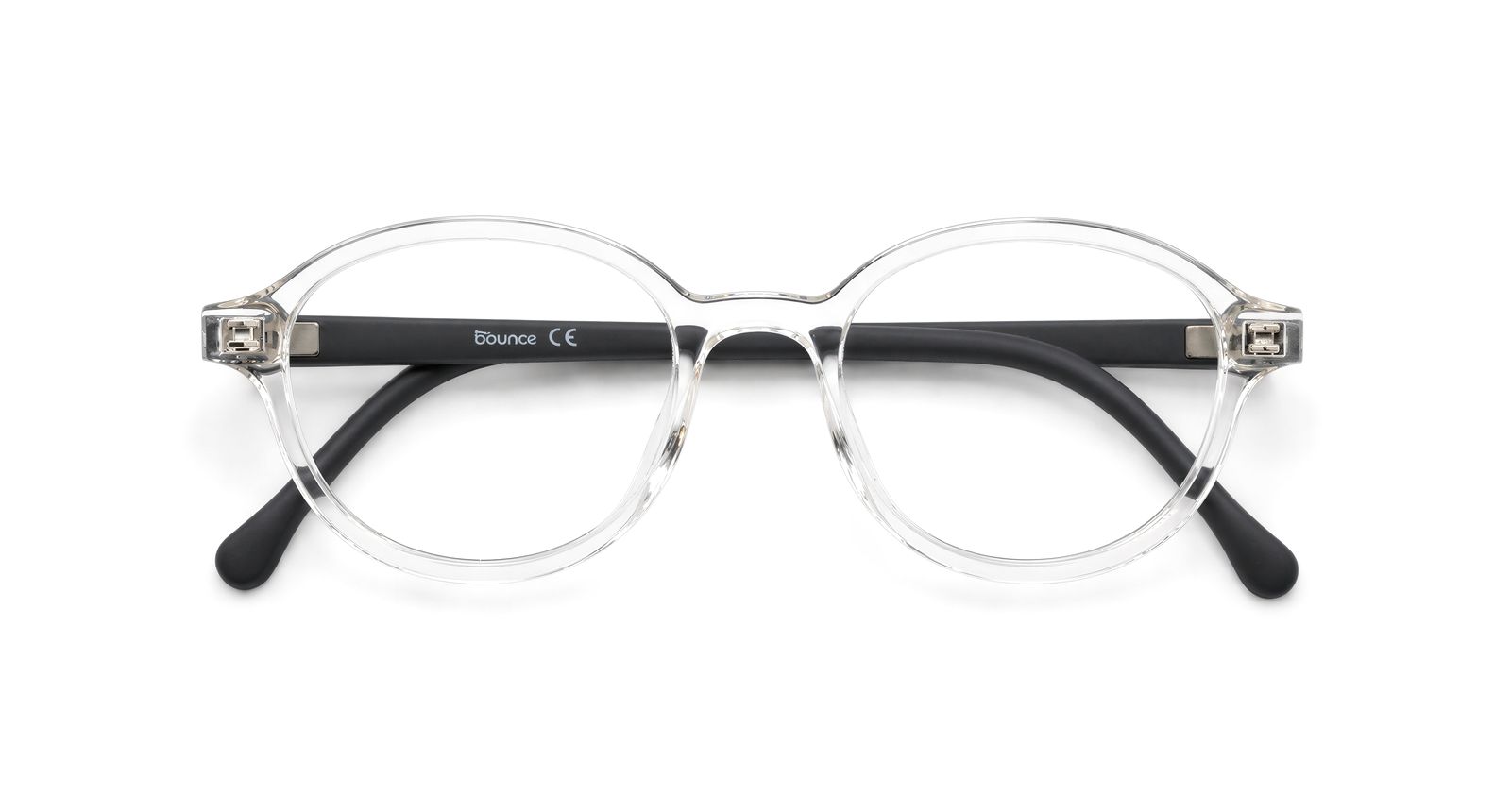
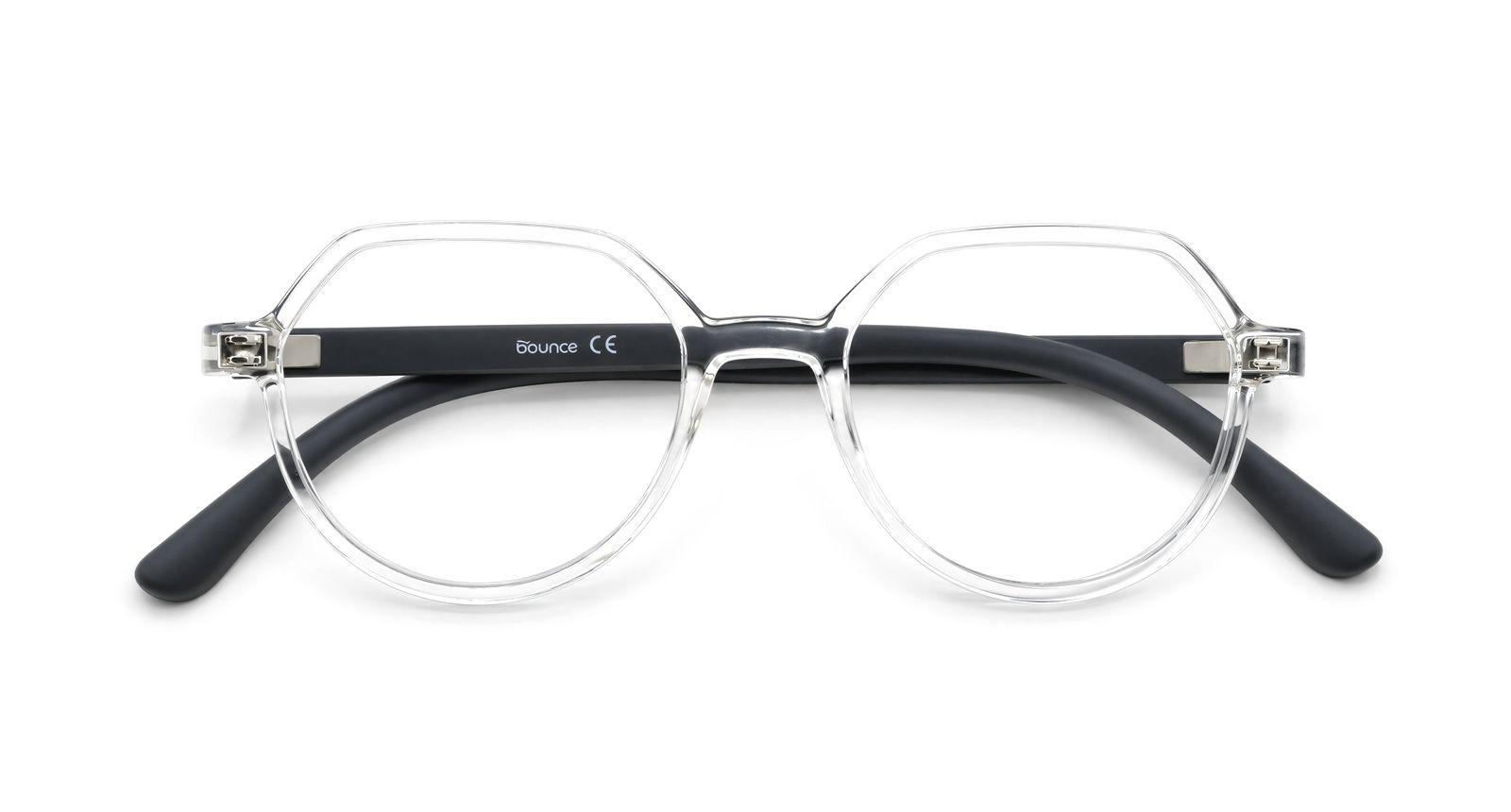
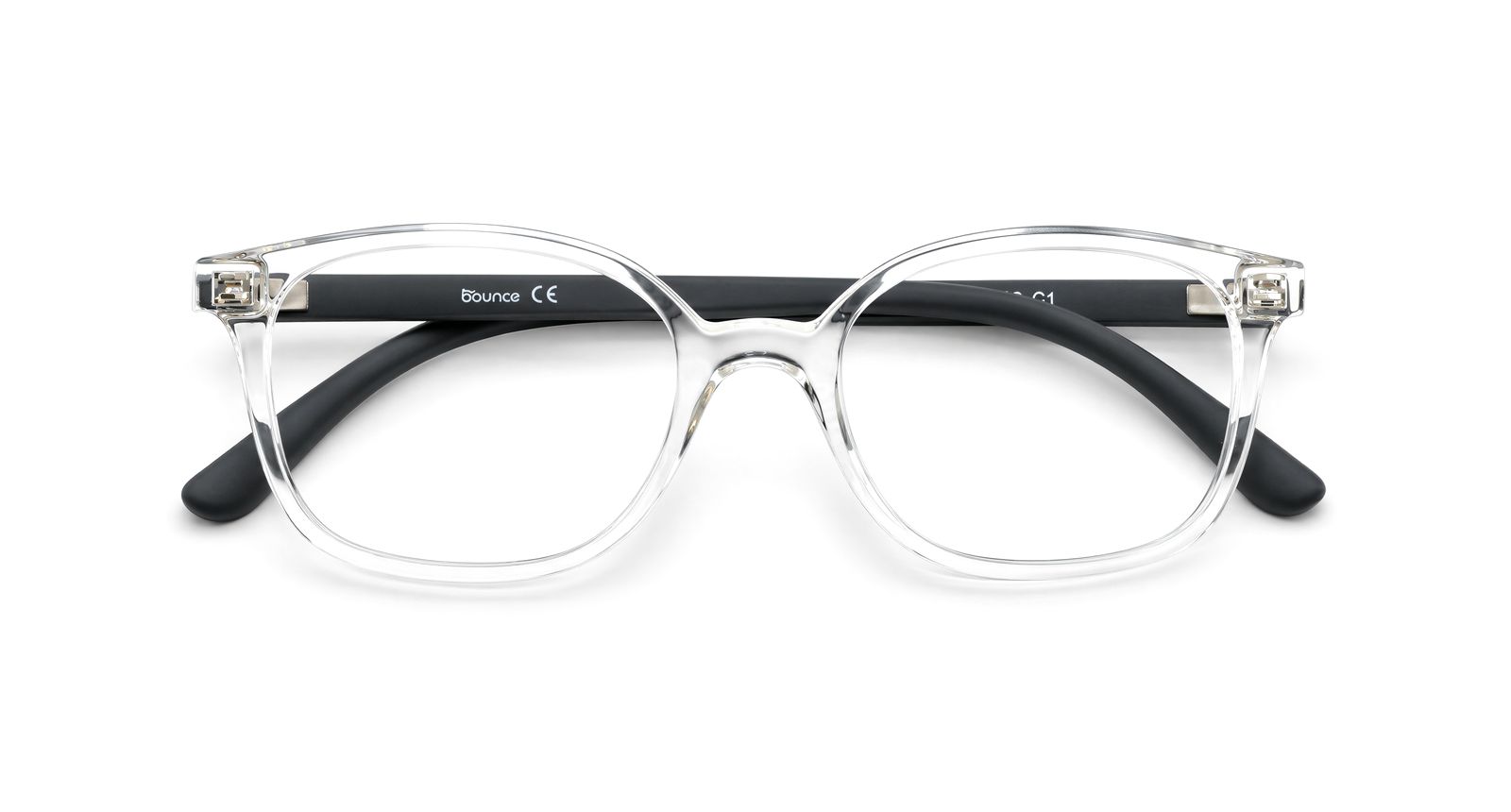
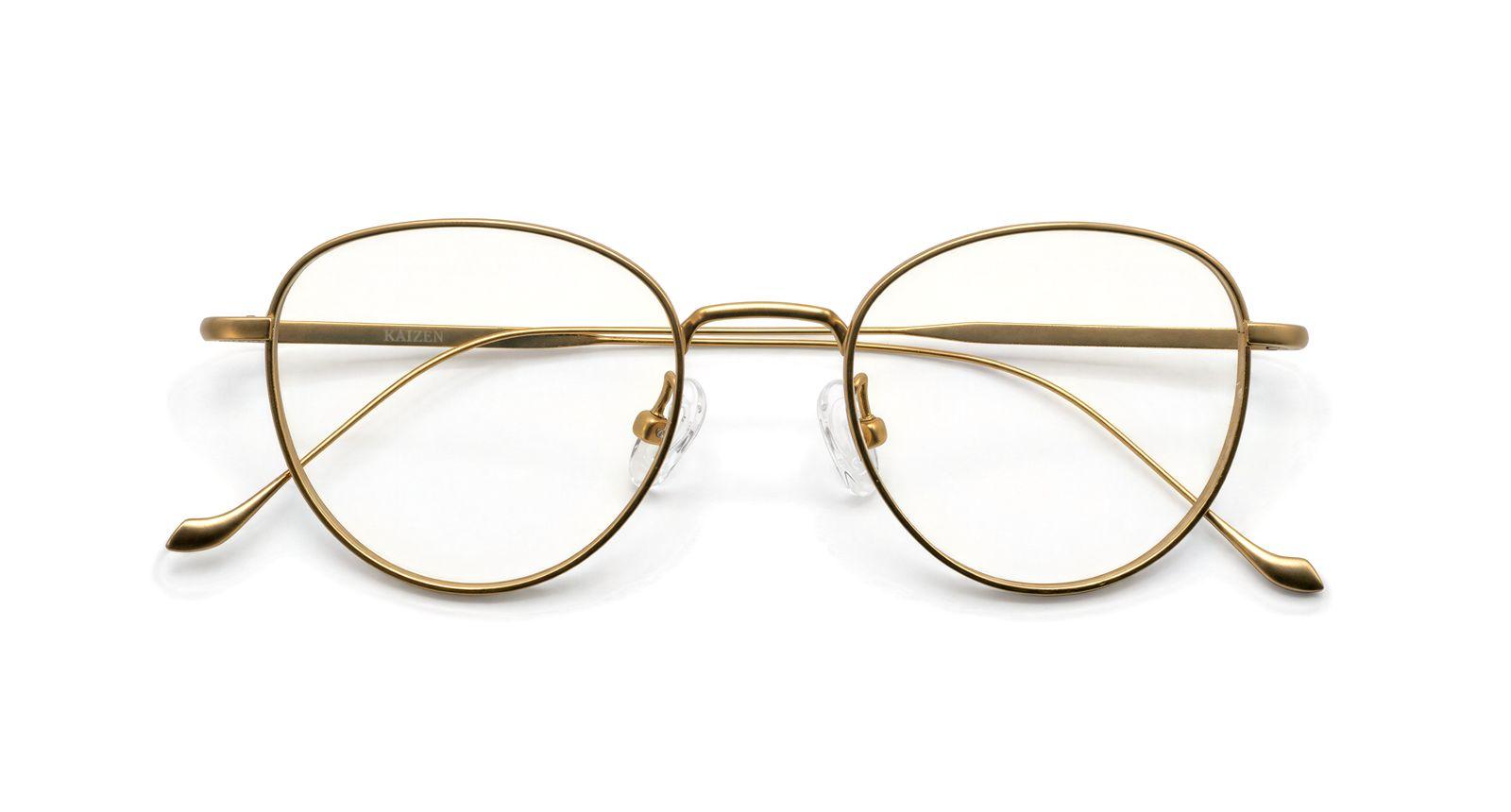
Flexible kids' glasses
Frames that bend a long way and come back. Not indestructible — nothing is — but they survive the things that end most children's glasses.
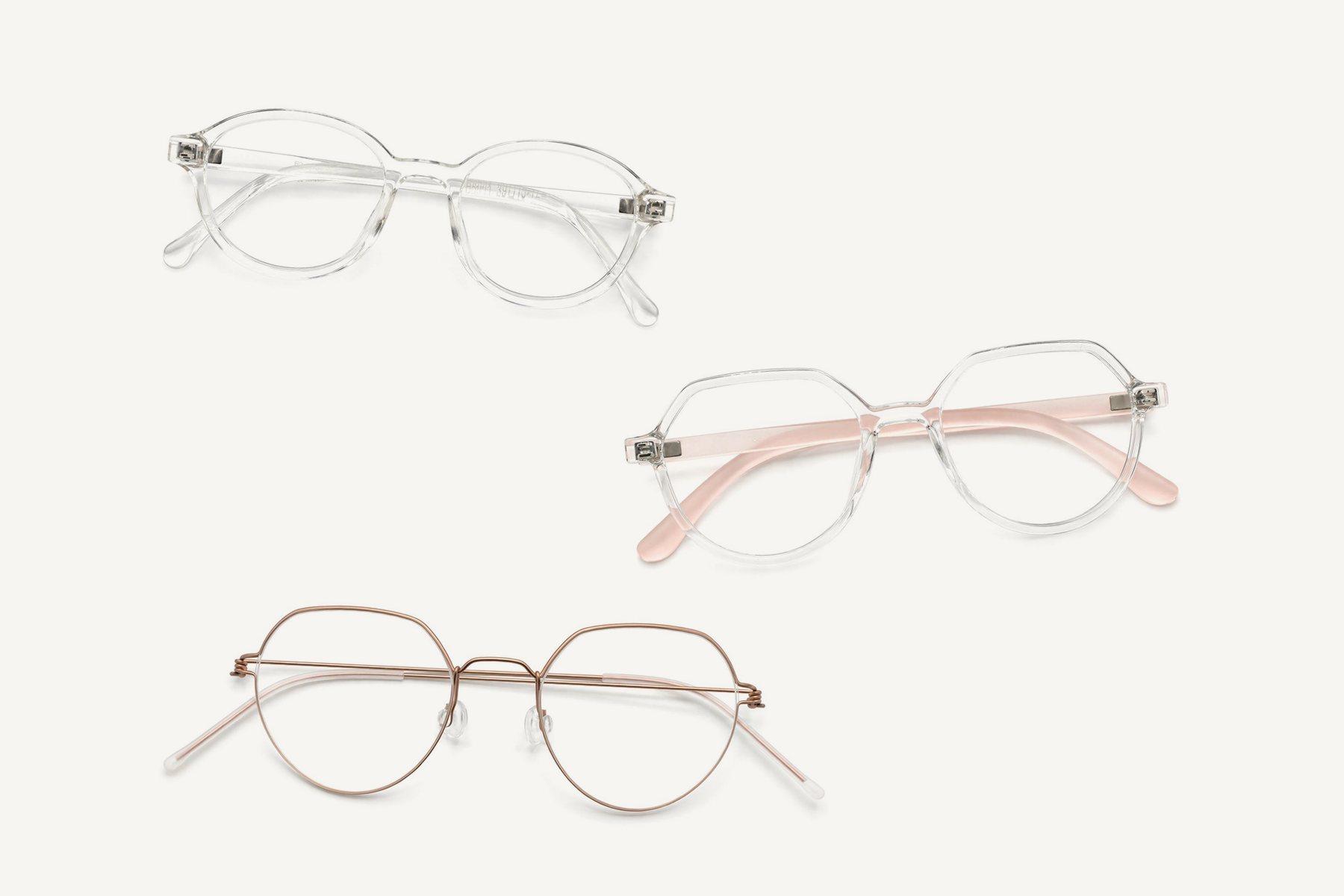
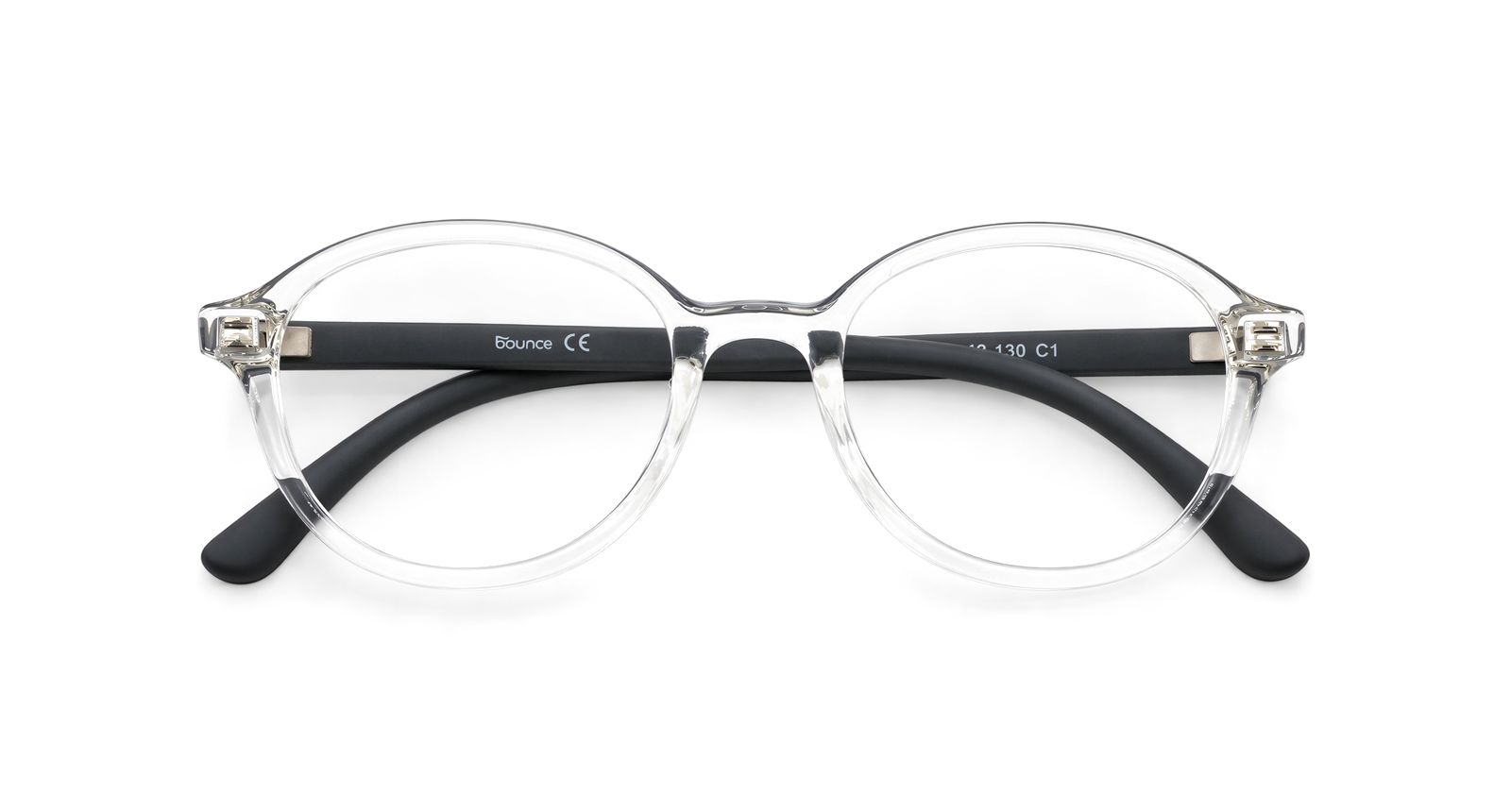
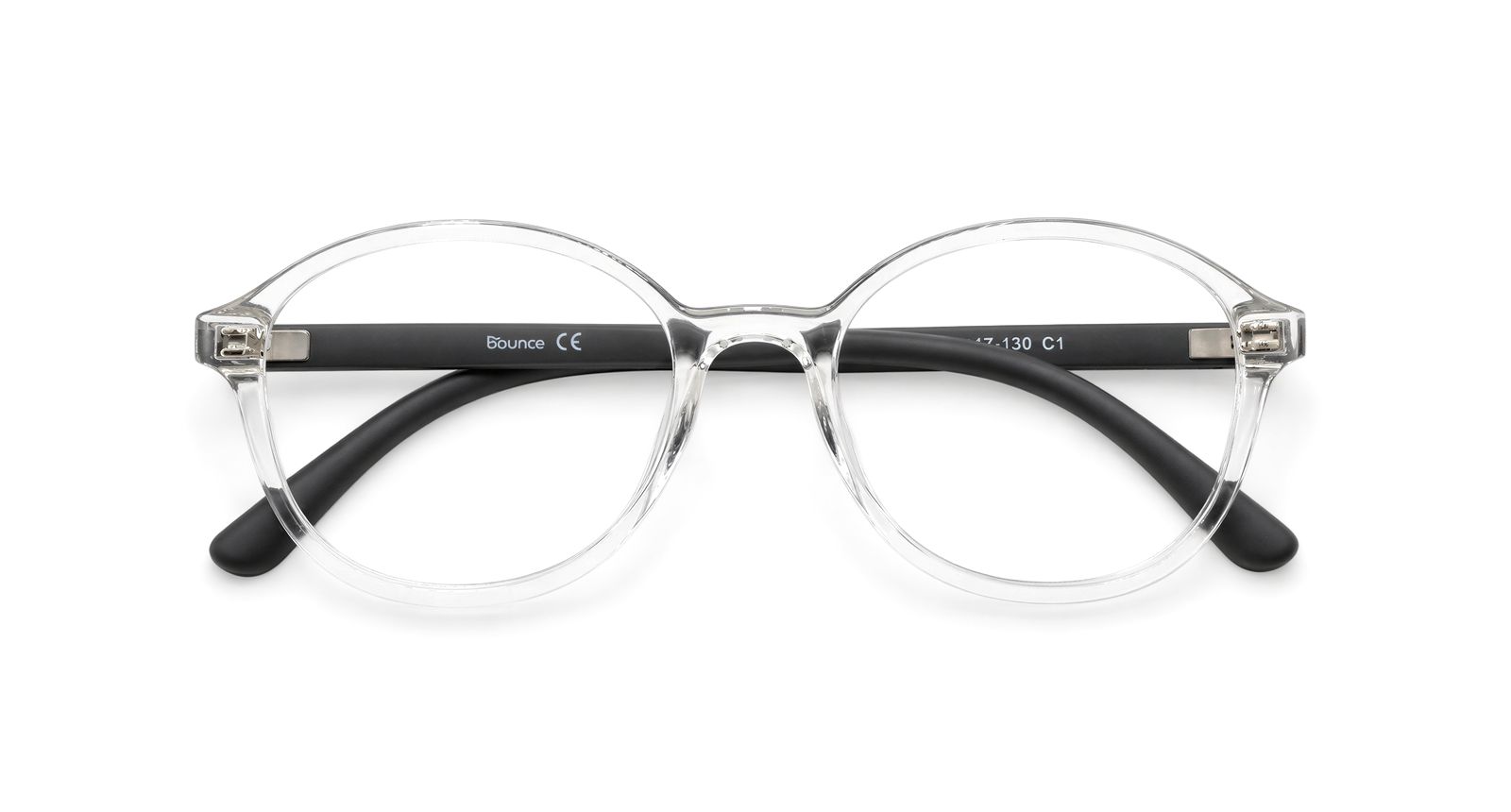
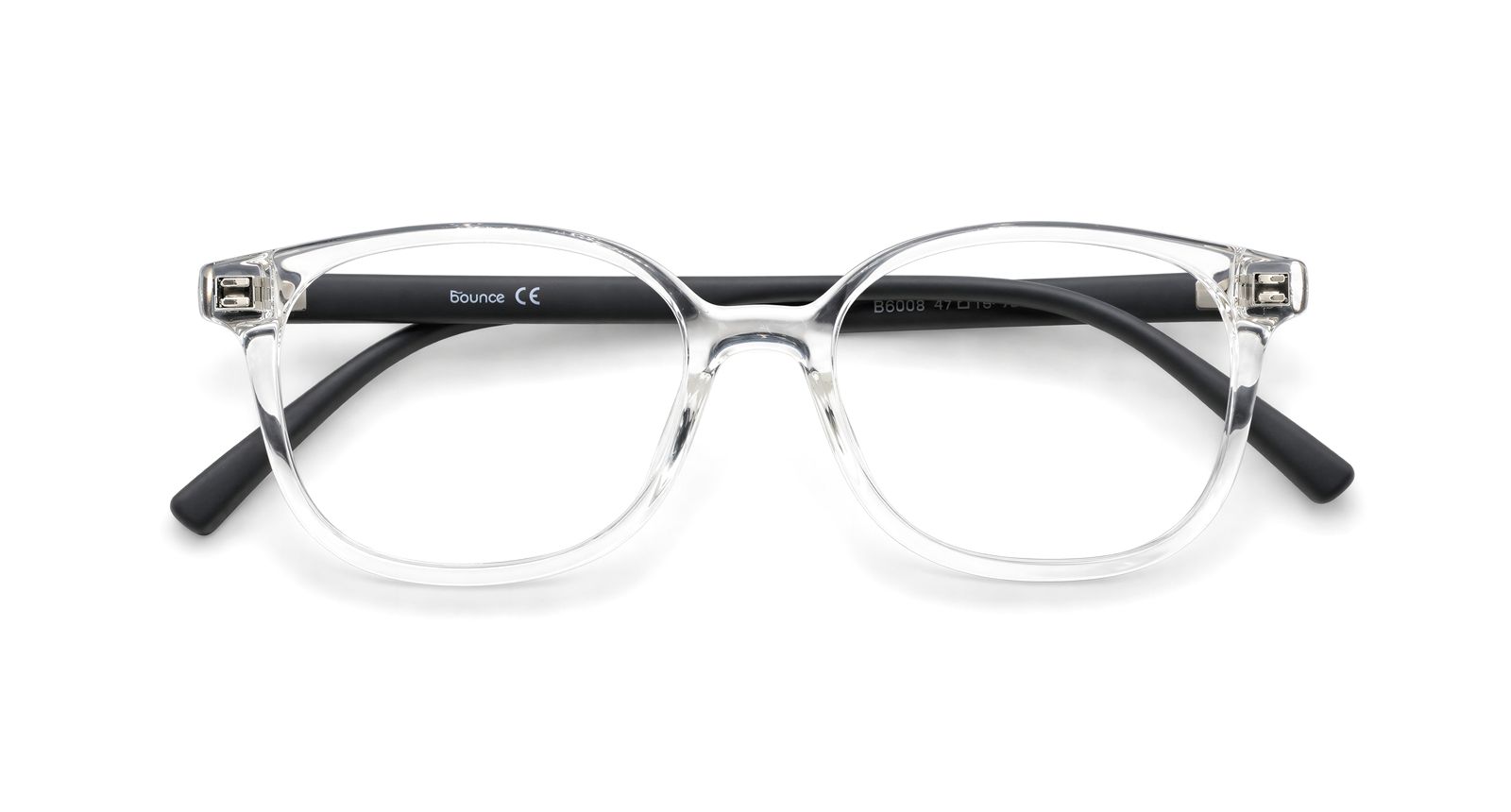
eight frames from 110mm to 127mm across the front
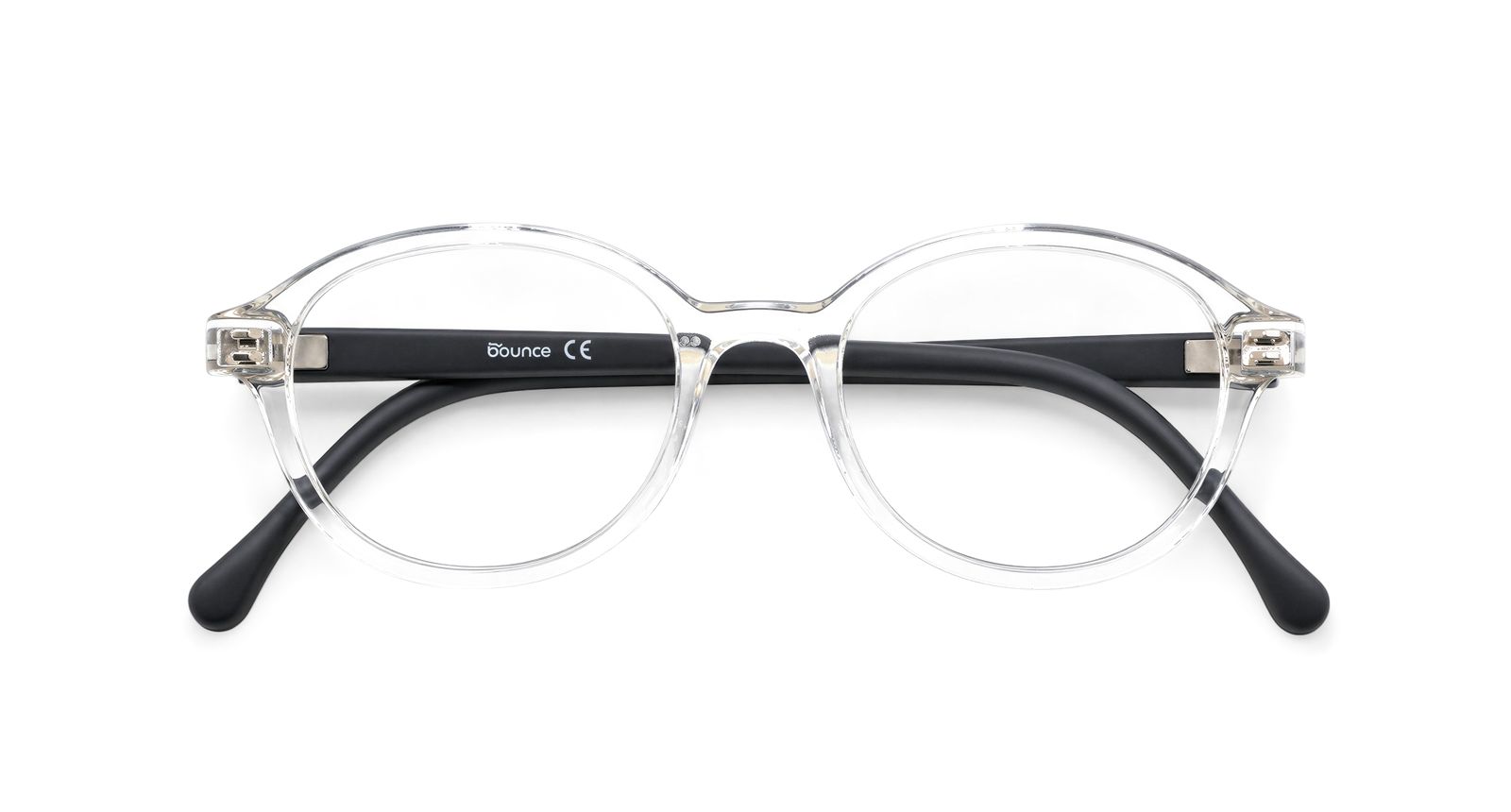
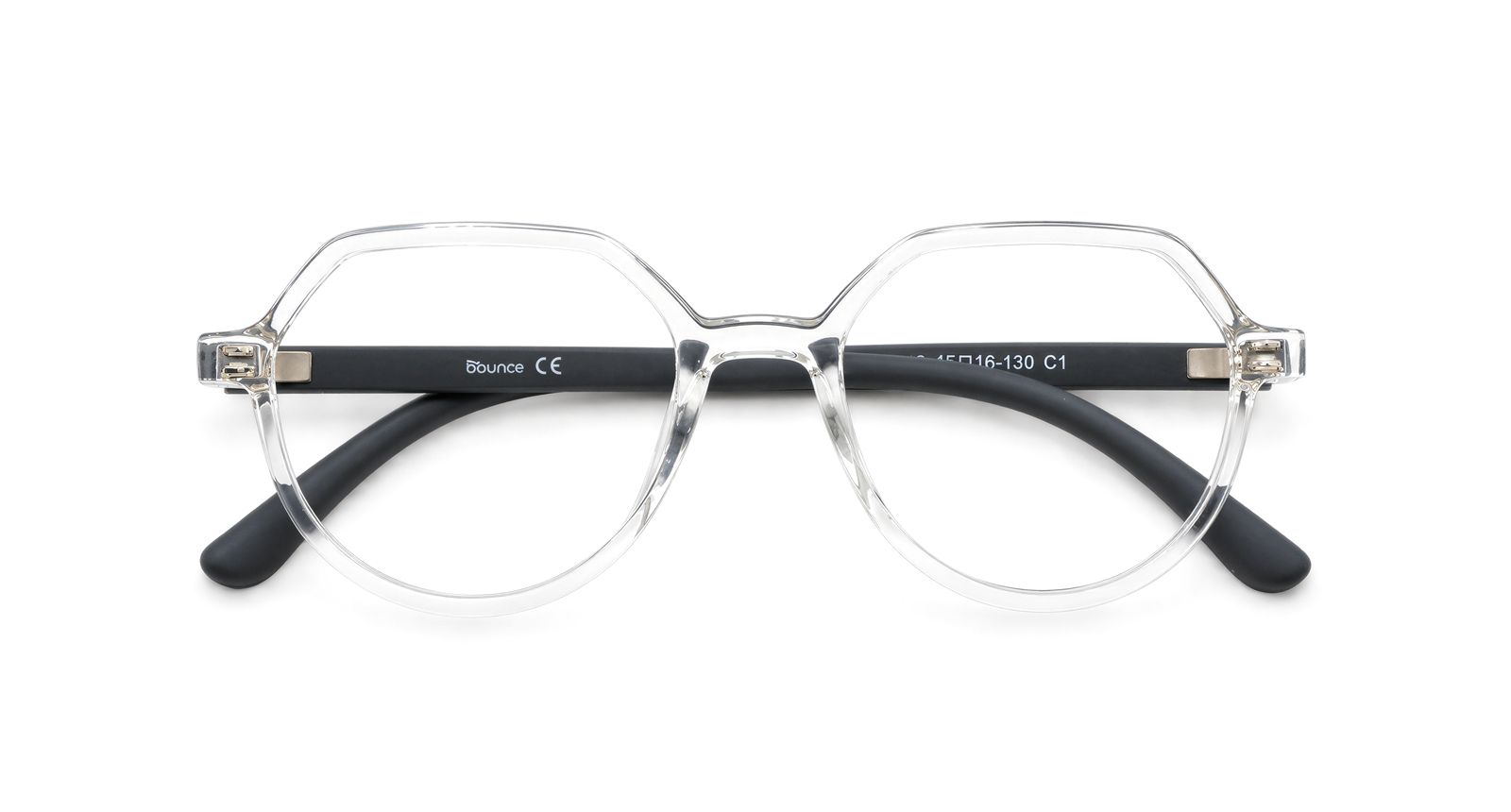
Where children's glasses actually break
Almost never the lens. It is the hinge, the bridge, and the joint where the arm meets the front — the three places a rigid frame has no give. A pair gets sat on, folded the wrong way, or pulled off one-handed a few hundred times, and eventually one of those three points gives up.
A flexible frame bends through the same movement and springs back. That is the whole difference, and it is why the Bounce line is made of TR-90 rather than acetate: not because it is tougher in some abstract way, but because it fails in fewer places.
Why most children's frames have a spring in the hinge
It is there to solve a problem the frame itself creates. A rigid front cannot give when a child pulls their glasses off one-handed, so the give has to come from somewhere — and that somewhere is a small sprung mechanism buried in the temple.
It is a sensible answer to rigidity, and it works. It also has moving parts: a barrel, a spring and a screw, where a plain hinge has almost nothing. Every one of those is a thing that can wear, seize or let go, and across a repair bench it is the piece that comes back more than any other.
Ours do not need one. The whole front flexes, so the give is already in the frame, and the hinge gets to be the simple solid kind with nothing much to go wrong. The flexibility is not only about surviving being sat on — it is what lets us leave out the part that breaks.
They are not unbreakable, and we will not say they are
It is a claim nobody can stand behind, because a frame that cannot break has not been invented and a child will find the exception. What we can tell you is where these bend instead of snapping, and what happens when one does not survive.
Break them in the first year and we replace them free, once per pair, and nobody argues about whose fault it was. We cut the lenses in our own lab, so the new pair is out in about two days.
The other half of surviving is fitting
A frame that is too wide slides down, gets pushed up a hundred times a day, and takes far more handling than one that sits where it should. Half of what looks like fragility is a sizing problem wearing a disguise — which is why every frame here is named for its measured width rather than a number stamped inside the arm.
The things worth knowing before you choose a pair, written out properly.
- There is no such thing as unbreakable children's glasses.Every brand selling the word means something different by it and no standard defines it. What the words on a listing actually describe, which one is already the law, and the two that are worth anything.7 minute read
- Ordinary glasses are not sports eyewear. Ours included.Polycarbonate lenses do not make a frame protective equipment, because certification tests the whole protector. Which sports need ASTM F803, and what an everyday pair is genuinely fine for.6 minute read
- What bends back, what springs back, and what snaps.Start with the screw. Then find out what the frame is made of, because half our range refuses to hold a bend at all — and learn when crooked glasses are a sizing problem rather than a bending one.6 minute read
- The best lens for a child is the one already in the price.Polycarbonate is the impact-resistant material and it is included. What every upgrade actually does, what each costs, and the honest case for skipping most of them.7 minute read
- Children's glasses break in the same three places.The hinge, the bridge, and the joint where the arm meets the front. Why a frame fails at those three points, why a spring hinge makes it worse, and the five habits that actually stop it.6 minute read
Not sure which size you are?
Three quick checks and we will mark the frames that fit.