The short answer
A child can break any pair of glasses made. Sat on, trodden on, pulled apart by a sibling, caught in a car door — there is a force above which every frame fails, and children find it.
What the good frames are is hard to break by accident, which is a real and useful property and is not the same claim. A frame that bends a long way and returns will survive being folded the wrong way in a bag, which is how most of them actually die. It will still snap if somebody stands on it.
So the question worth asking is not whether a frame is unbreakable. It is what happens on the day it breaks, because that day is coming.
What the words on the listing mean
| The word | What it actually means | Worth anything? |
|---|---|---|
| Unbreakable | Nothing. No standard defines it and no body checks it. It is an adjective. | No |
| Indestructible | The same adjective, louder. | No |
| Impact-resistant lenses | A real standard — and already the law. The FDA requires impact-resistant lenses in eyeglasses and sunglasses sold in the US. | It is the minimum, not a feature |
| Flexible / bendable | Describes the front and arms deforming instead of snapping. Usually means a springy thermoplastic. | Yes |
| Memory metal / titanium | Arms that return to shape after twisting, and a metal that does not corrode against skin. | Yes |
| Spring hinge | The arm opens past its stop. Adds a small mechanism at the exact point frames fail most. | Mixed — see below |
The impact-resistance line is the one worth remembering. Under 21 CFR 801.410 the lenses in every pair of glasses and sunglasses sold in the United States already have to be impact-resistant. When a listing offers it as a feature, it is describing the legal minimum.
Spring hinges are sold as a durability feature.
They are a small sprung mechanism added to the hinge, and the hinge is where children’s glasses break most often. Adding moving parts to the weakest joint helps with one failure — the arm forced outwards — and adds a new one, because a spring can fail on its own and usually cannot be repaired without replacing the whole arm.
It is a reasonable trade and it is not the free win it is sold as. Worth knowing which side of it you are buying.
The materials, and what each actually survives
There are four constructions in most children’s ranges, including ours. None of them is unbreakable and each fails differently.
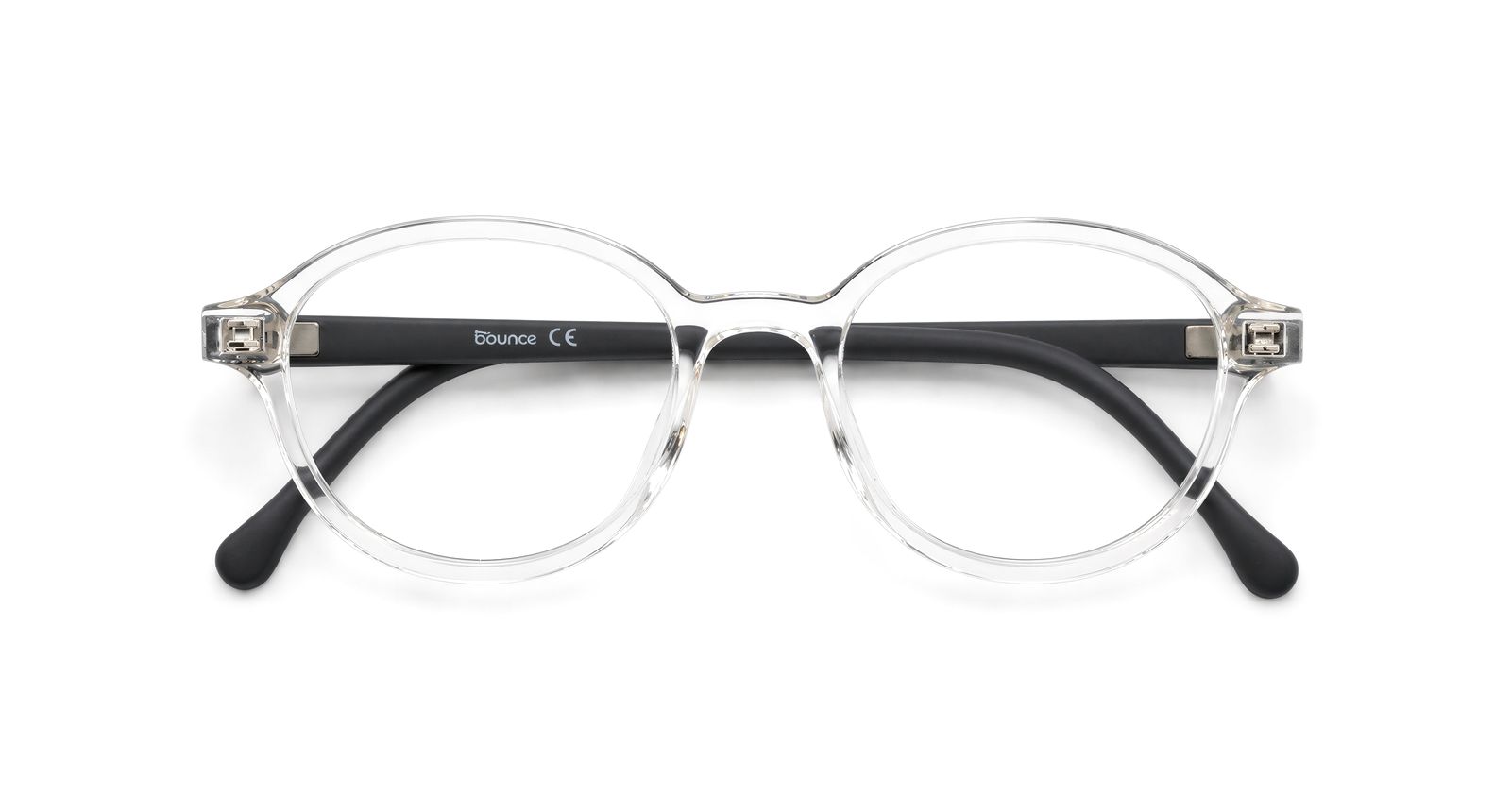
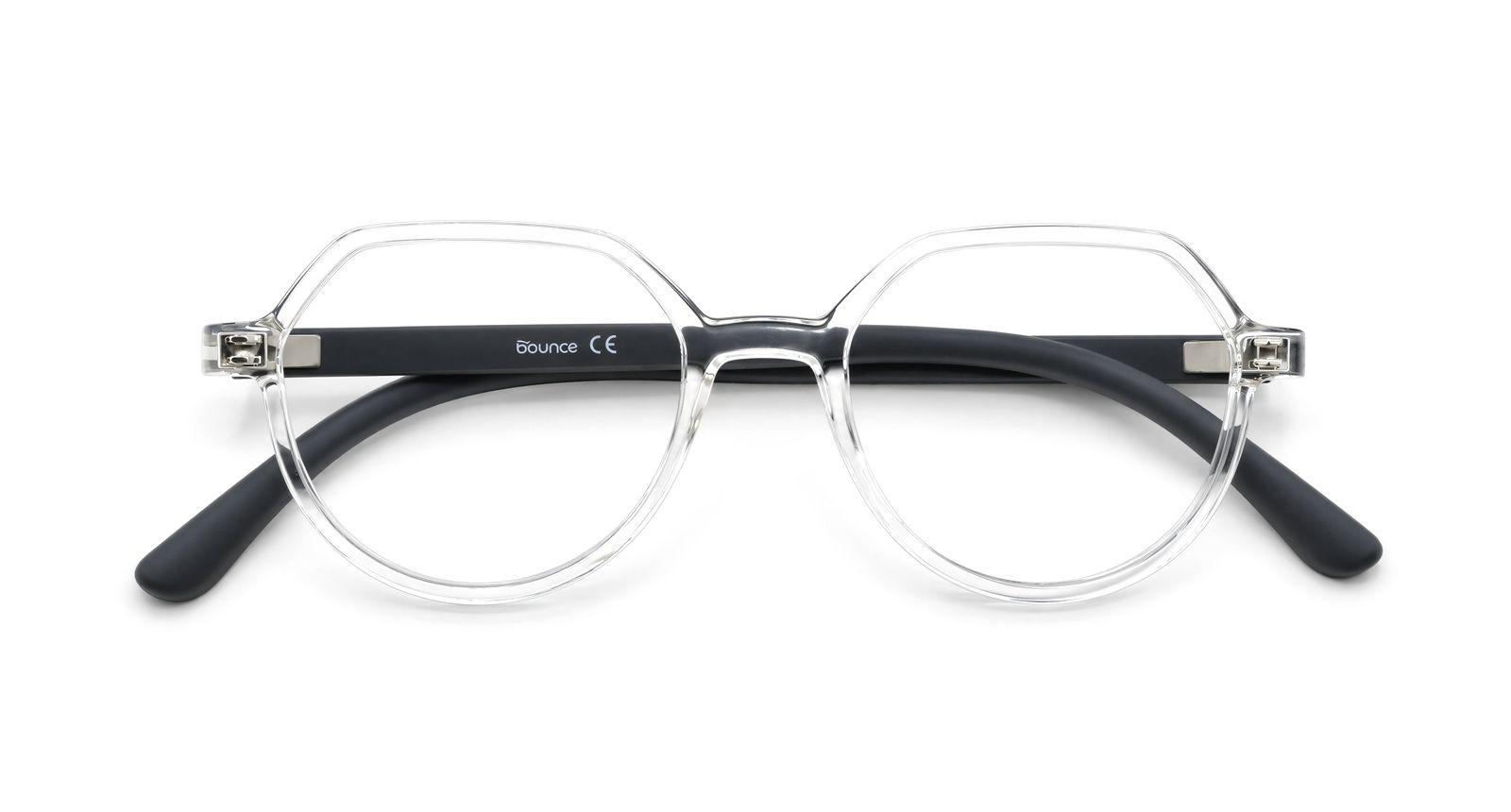
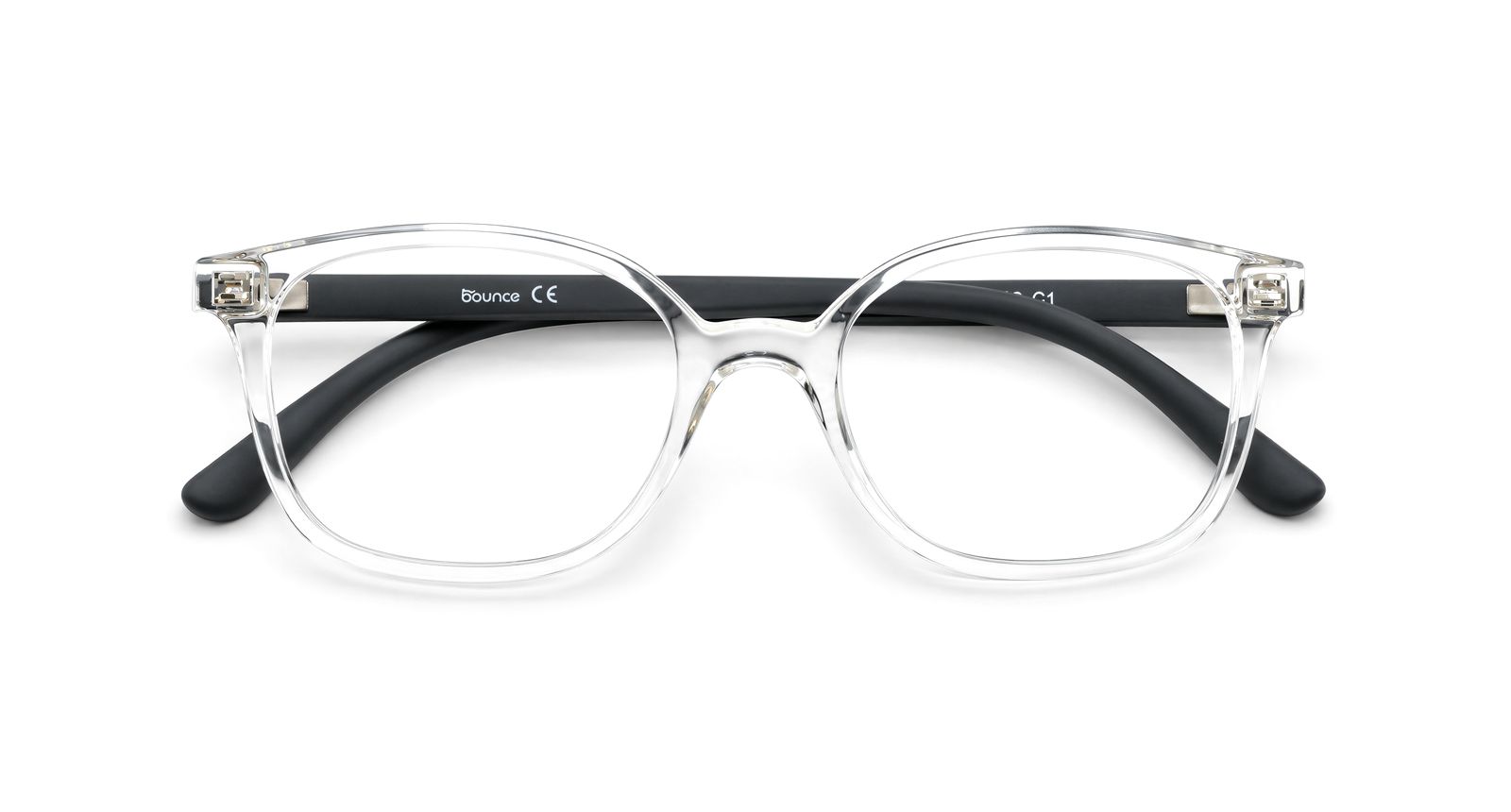
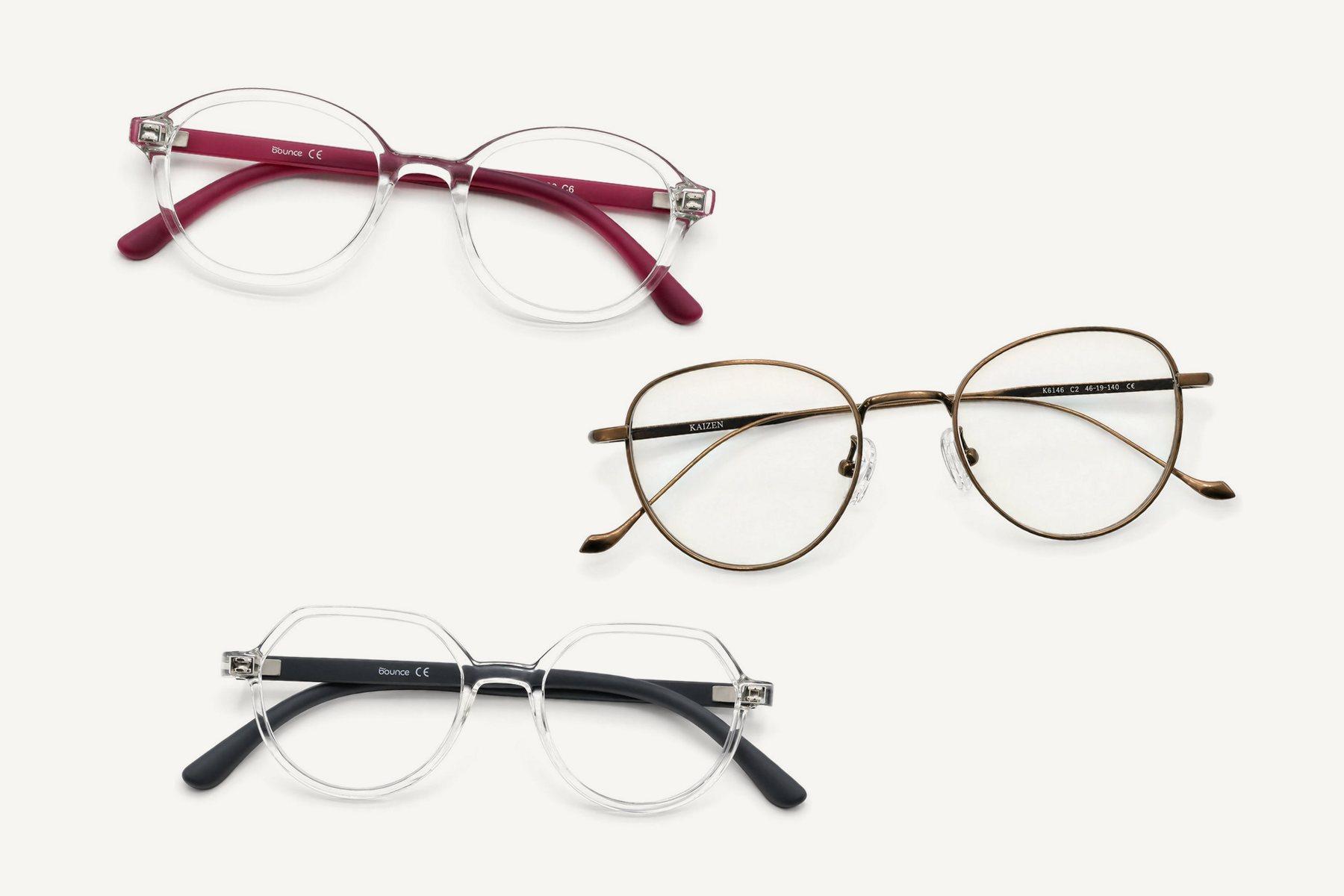
- TR-90 — Bounce, 8 frames from $95A springy thermoplastic. Deforms and returns rather than snapping, which covers being folded the wrong way and sat on. Softer than metal, so it scratches and can take a set if it is left bent for months.
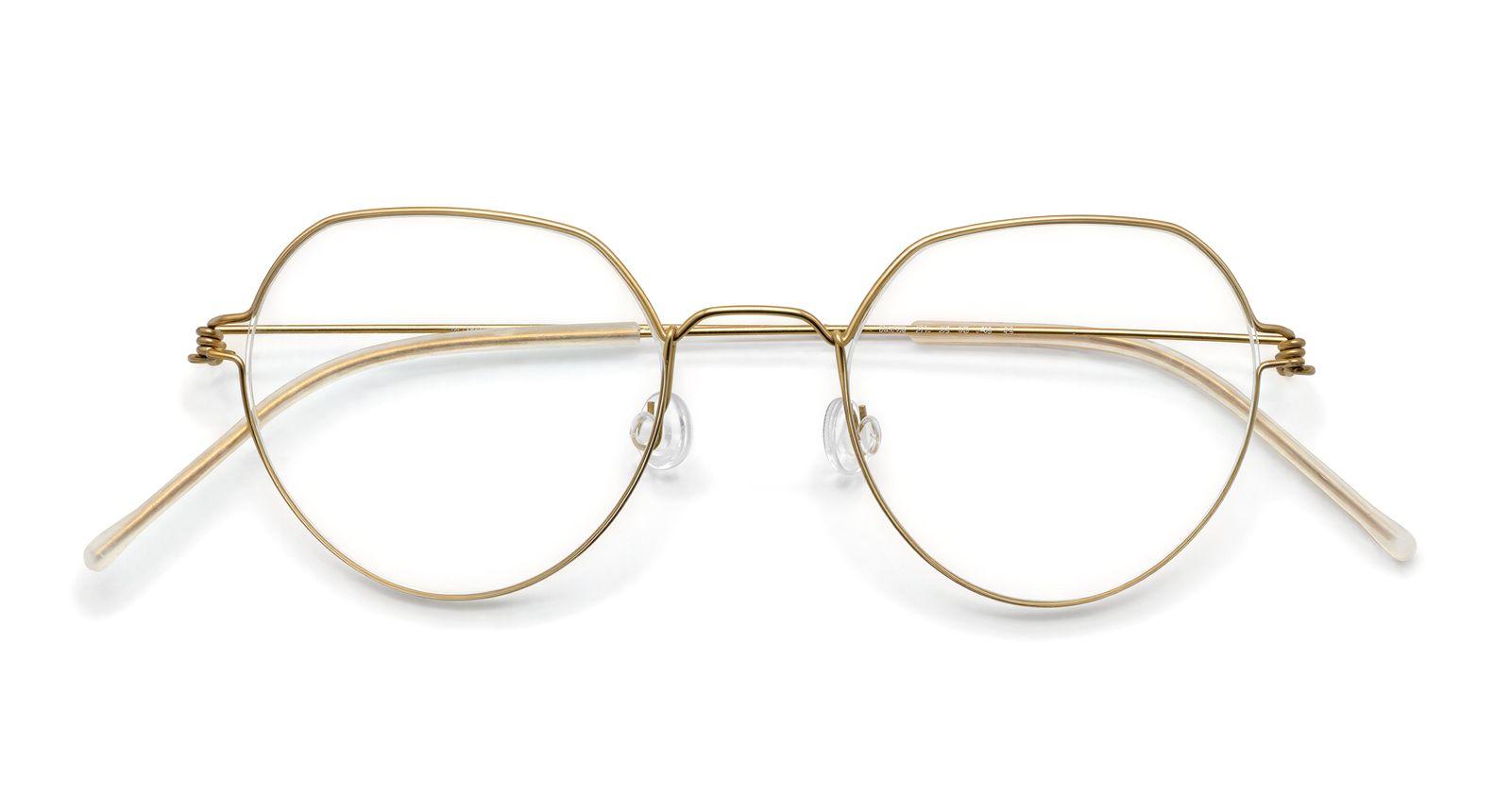
- Titanium — Nord, 3 frames from $149.98Titanium throughout. Light for its strength, will not corrode against skin, and holds an adjustment rather than drifting out of it. It bends before it breaks, and bent metal needs an optician rather than a pair of hands.
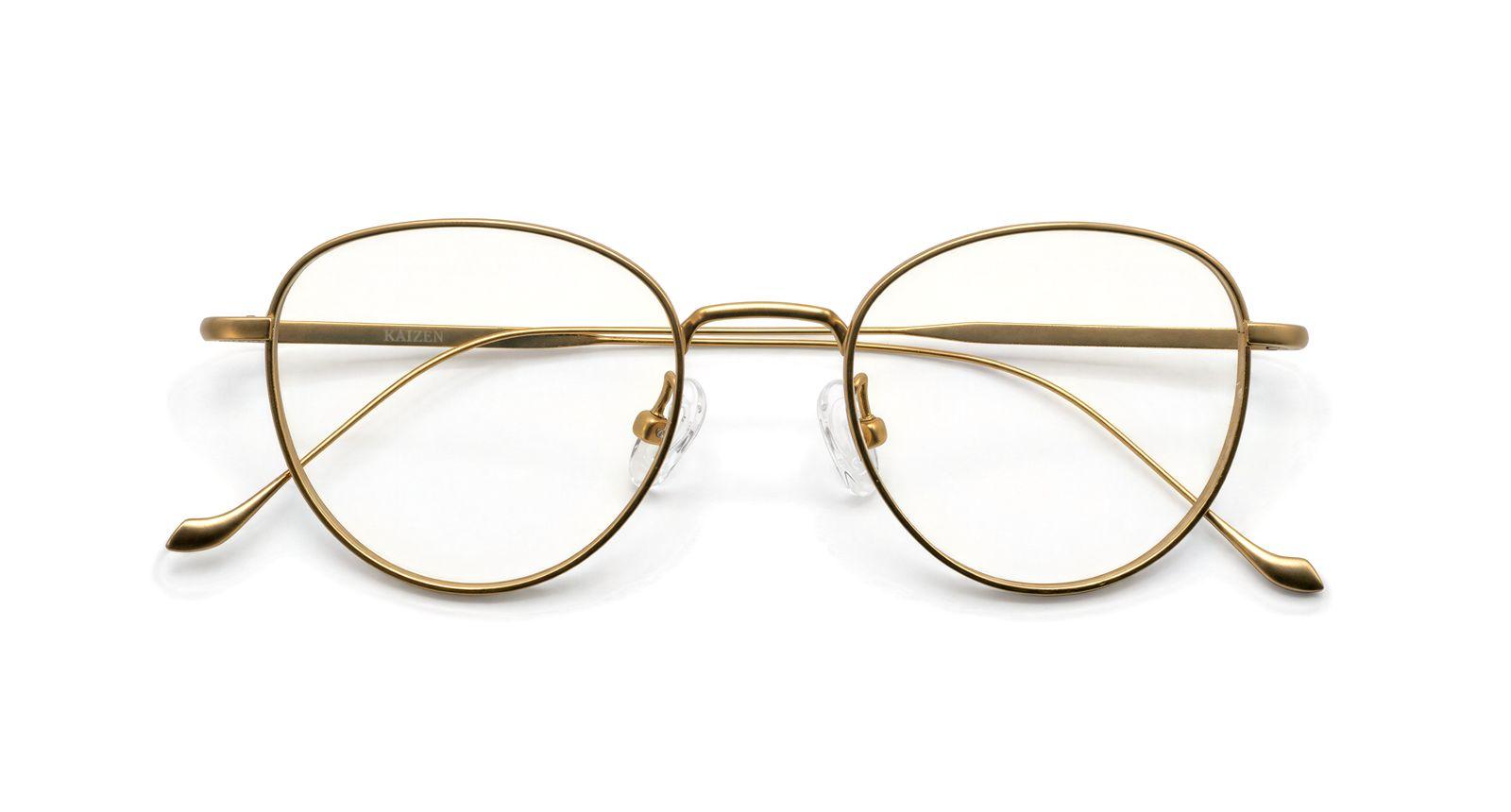
- Titanium — Kaizen, 3 frames from $169.98Titanium, assembled with screws rather than rivets, so a hinge or an arm can be replaced instead of the frame being written off. That is the closest anything here gets to the promise the word unbreakable is making.
Notice what the last one is actually claiming. Not that it will not break — that it can be fixed when it does. Repairability is the honest version of durability, and it is almost never on a listing because it is expensive to build and impossible to photograph.
What to look for instead of the word
- Does it fit? A frame that is too wide gets pushed, pulled and knocked off a hundred times a day, and takes far more abuse than a frame that sits still. Fit is a durability feature and nobody sells it as one.
- Are the arms screwed or riveted? Screwed means an arm or a hinge can be replaced. Riveted means the frame is the unit, and a failed hinge is a bin.
- What happens when it breaks? Read the replacement policy before the material description. A one-year no-questions replacement is worth more than any adjective on the page.
- Can you get it adjusted? Most frames come back bent rather than broken, and most opticians will straighten one in two minutes for nothing.
The detail of where they fail, and the habits that genuinely reduce it, is in where children’s glasses break.
What we would do
Buy the frame that fits, in a material that bends, from somebody who will replace it. We will not tell you any of our frames is unbreakable, because a child will break one and then we would have lied to you in writing.
What we say instead is that if you break them we replace them free for 12 months, however many times it happens. The glasses are not unbreakable. The promise is.