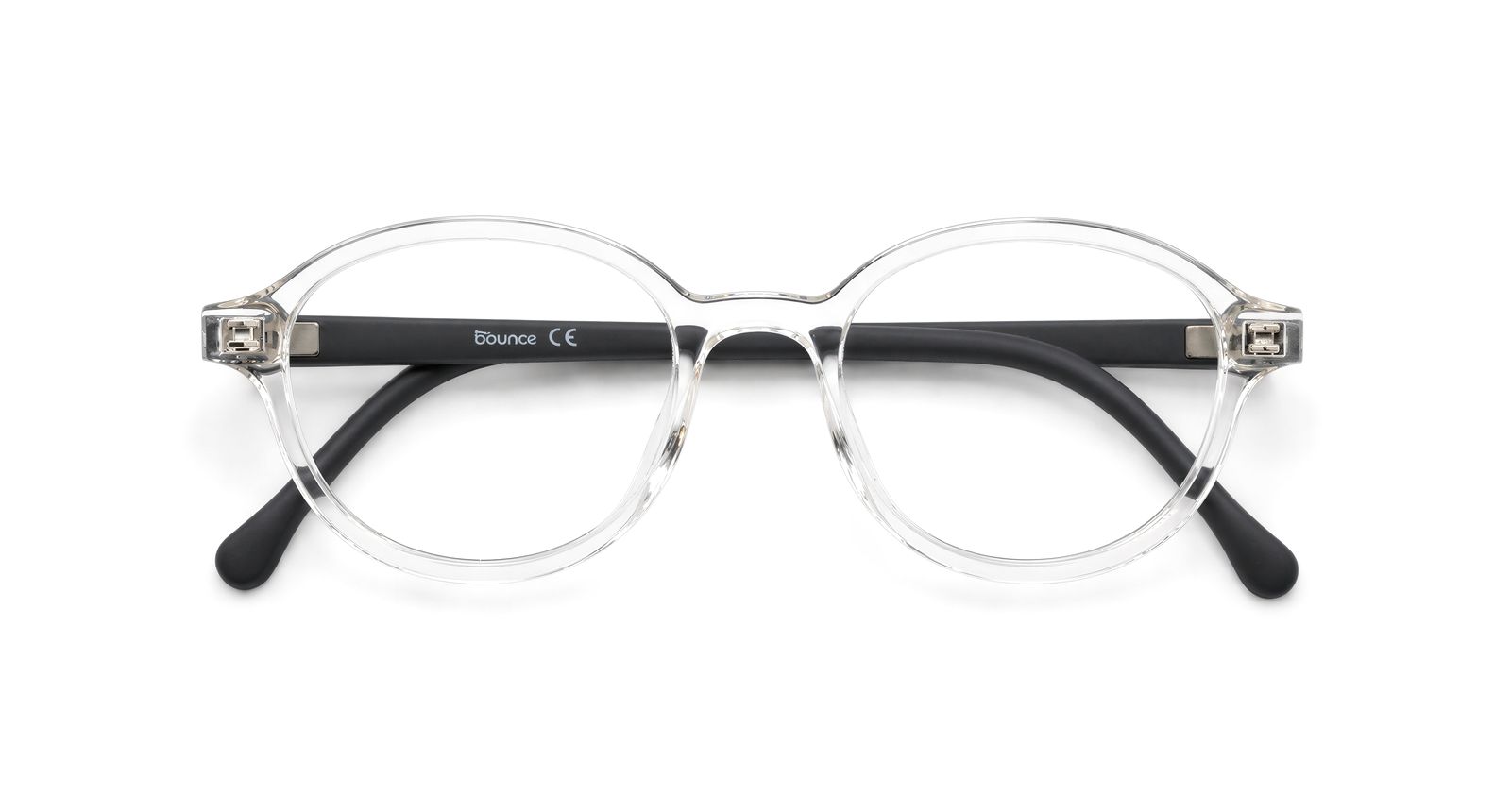
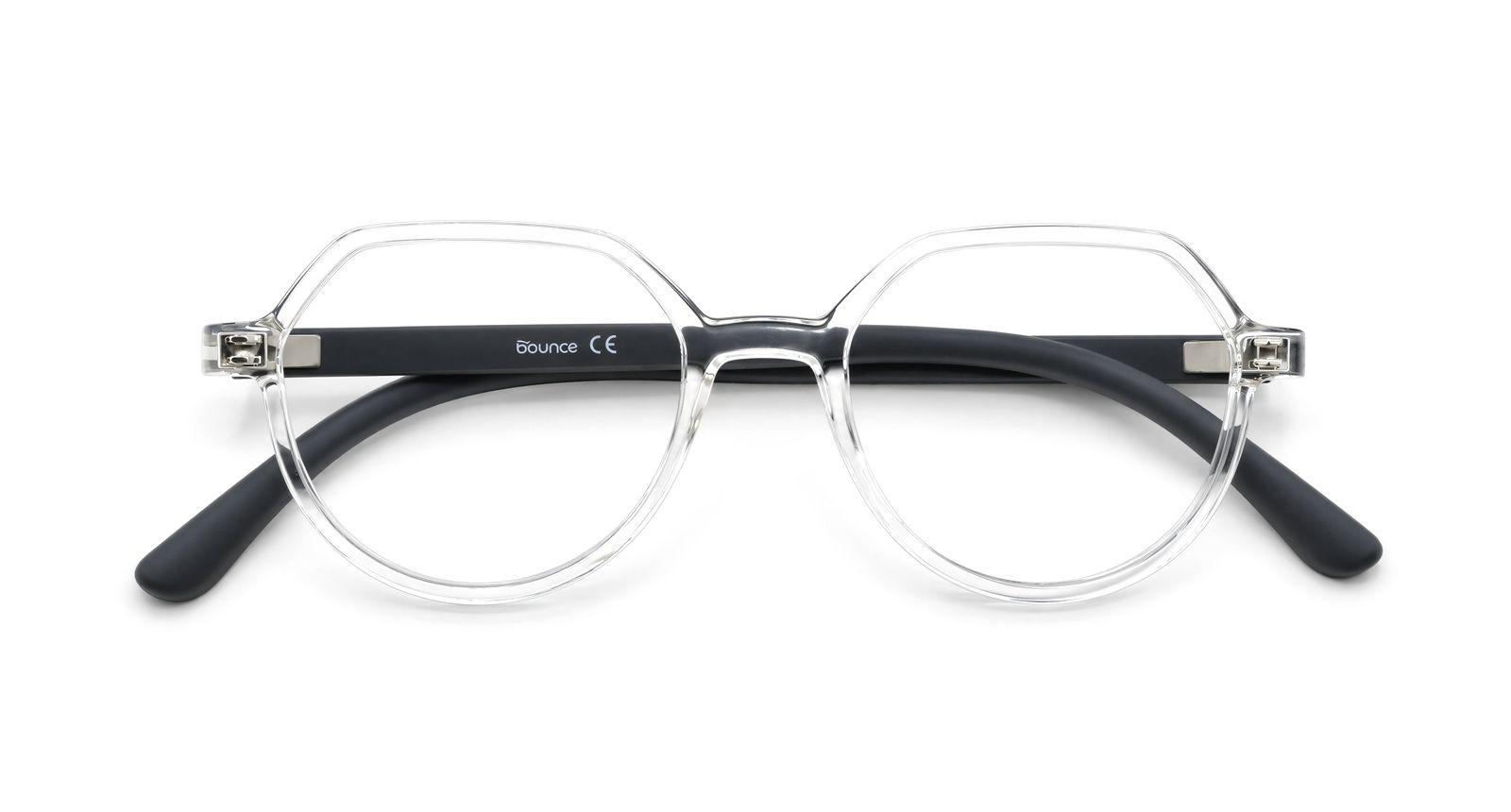
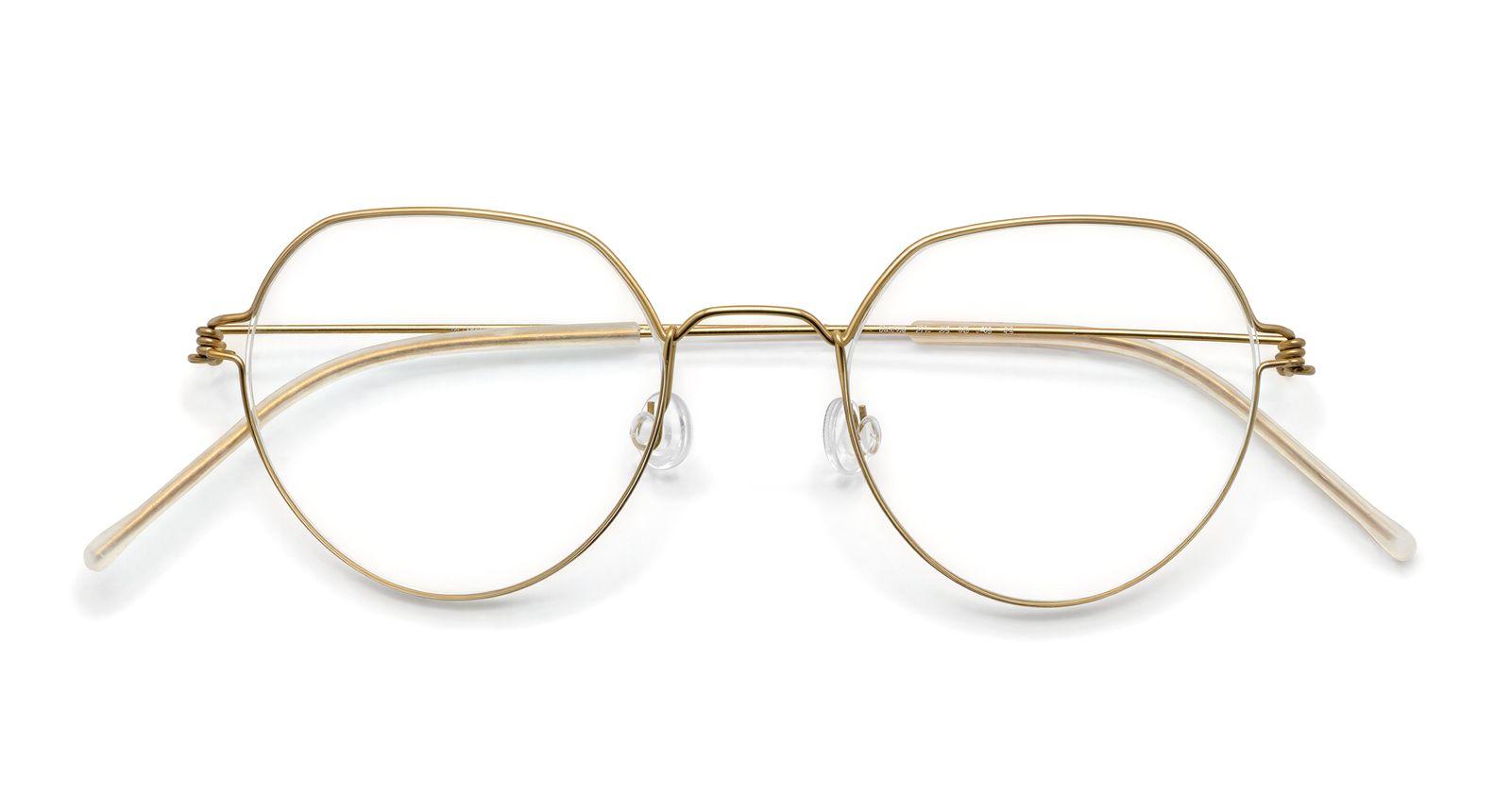
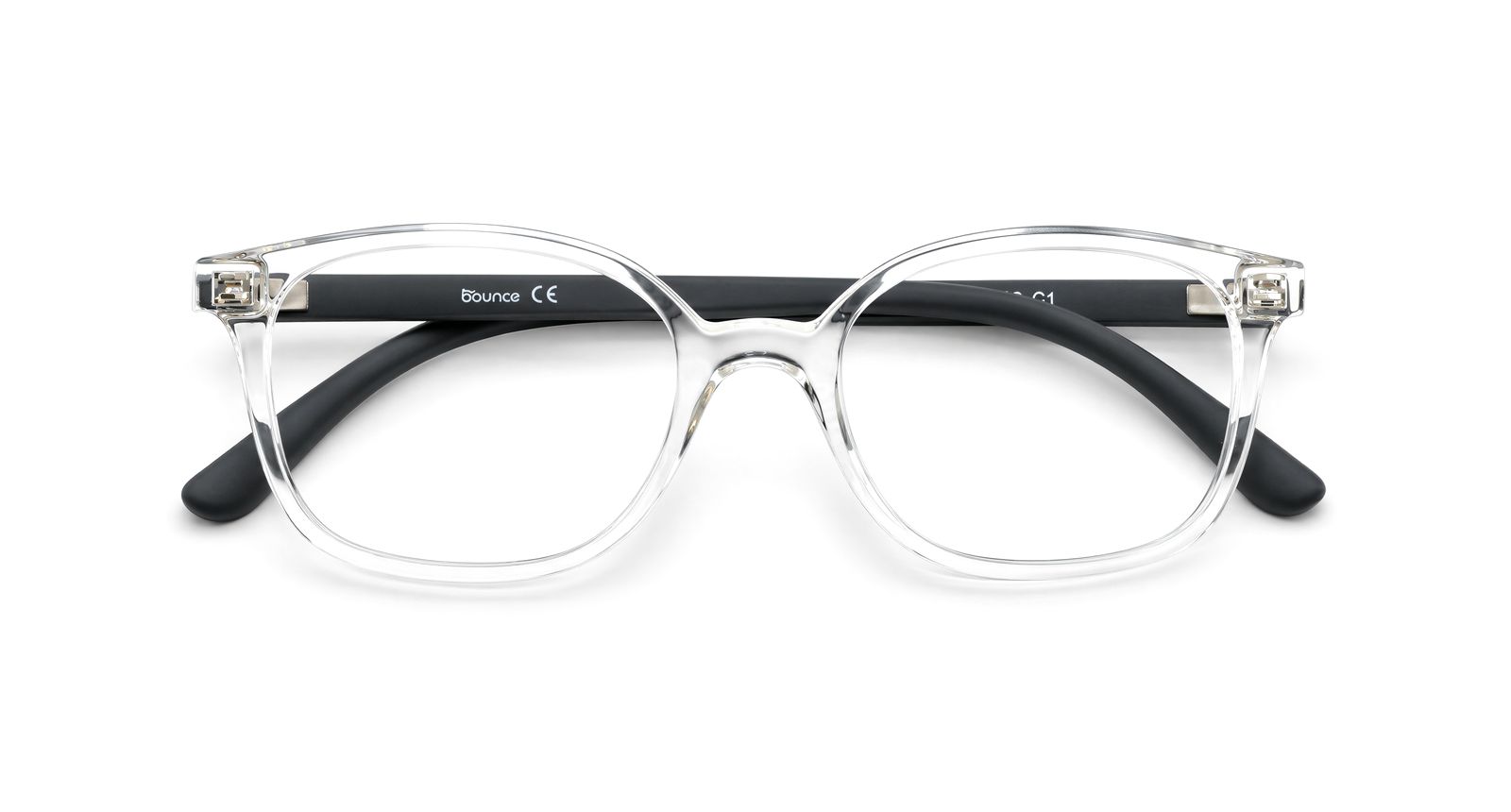
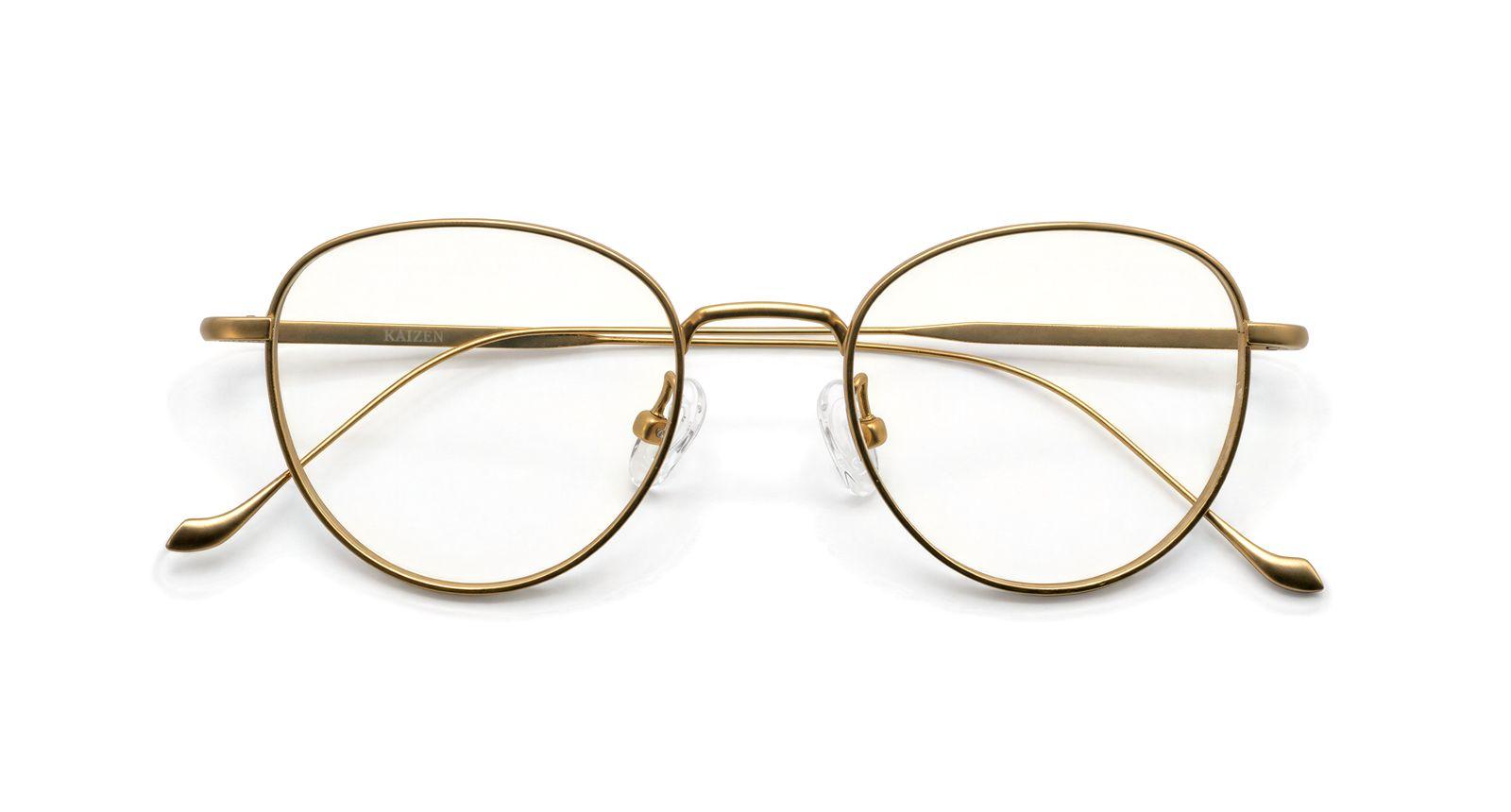
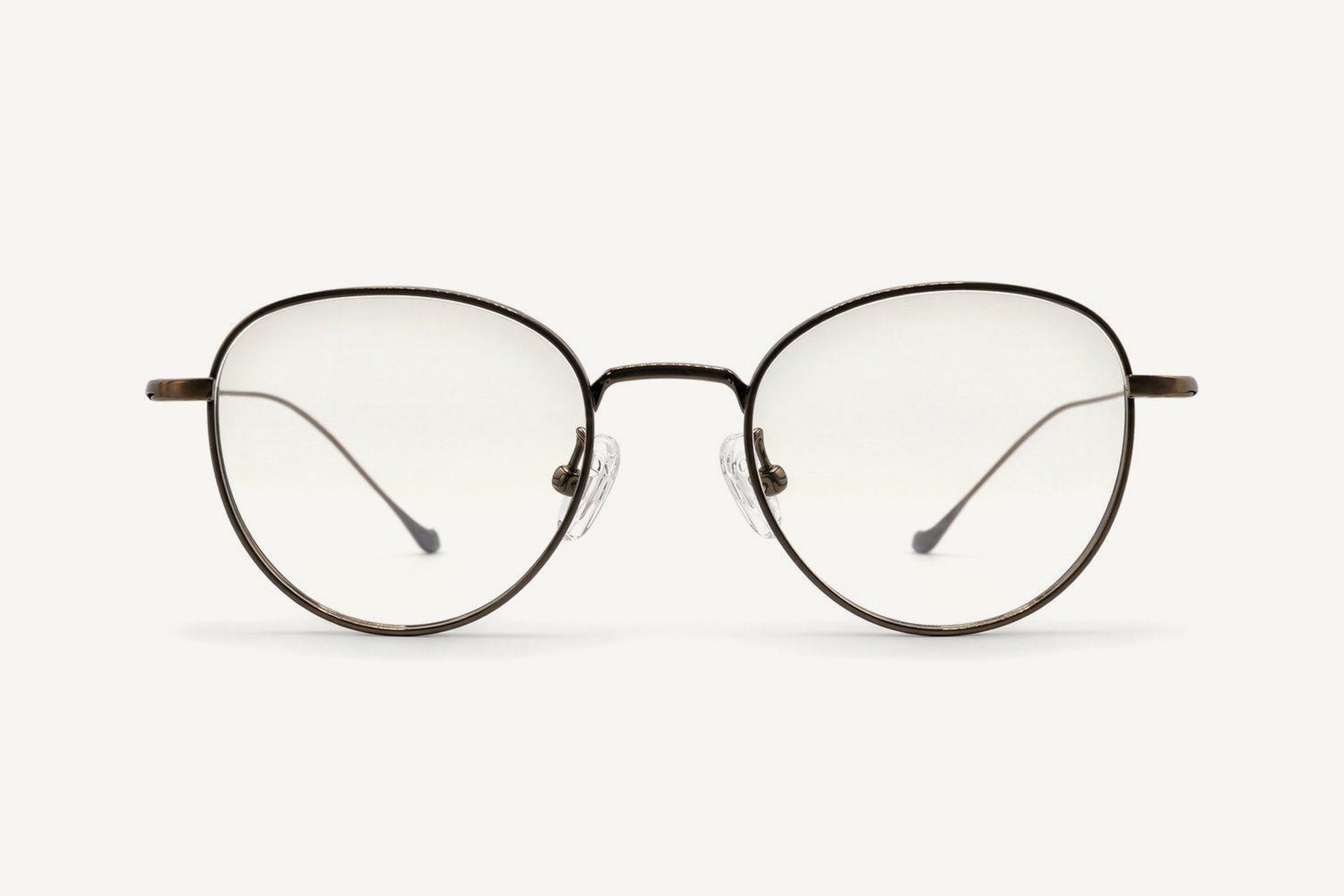
There is no standard, which is the root of it
The industry’s measuring system — the boxing system — defines the eye size, the bridge and the frame PD, and then stops. It does not define the total width of a pair of glasses. There is no agreed number for the thing that decides whether a frame fits a face.
So brands that publish a width are each using their own convention. The common one is hinge screw to hinge screw. Ours was the widest span across the front, which on an acetate frame includes the flare outside the hinge and on a wire frame does not — meaning the two conventions differ by more on plastic than on metal, which is exactly the sort of thing that hides in a size chart.
We now hold both. That is not tidiness; it is the only way our numbers can be compared with anybody else’s.
The measurement
Front width is the horizontal distance between the outermost points of the frame front, temples excluded.
- Fold the temples in, so they cannot add width.
- Lay the frame face down, front flat against the table.
- Measure the widest horizontal span, outer edge of one end piece to the other.
- Include the end pieces and hinge barrels where they sit inside the front’s outline. Exclude any part of the temple itself.
All of them have happened to us.
Temples open. The hinge flares outward when the arms are out, and catching it reads a few millimeters wide.
Lens to lens. Measuring across the rims and missing the end pieces reads narrow. This is the one that put a frame in our own catalog three millimeters under its real width, and it stood until a cross-check caught it.
Around the curve. A frame wraps. Measure the straight chord, flat across, not the path around the front.
The cross-check that catches a bad reading
Arm length stays in proportion to front width within a line. Metal and Ultem wrap further round the head, so they run proportionally longer than plastic — that difference is real rather than an error, which is why the check is done per line rather than across the range.
| Line | Construction | Arm ÷ front, median | Range across the line | Front − usable |
|---|---|---|---|---|
| Bounce | TR-90 | 1.068 | 1.048–1.130 | 10mm |
| Nord | Titanium | 1.129 | 1.125–1.133 | 3mm |
| Kaizen | Titanium | 1.107 | 1.074–1.111 | 5mm |
A frame more than about 4% off its own line’s ratio gets measured again. That is what caught the lens-to-lens error above: a 145mm arm cannot belong on a 127mm front.
The emphasis matters and the table above flatters it. These are medians, and the per-frame ranges overlap heavily — the TR-90 line’s range on its own contains nine of the ten frames from the other three lines. So this is a real outlier detector within a line and it identifies nothing between lines. You could not work out what a frame is made of from its ratio, and the three decimal places should not be read as saying you could.
The last column is the gap between the outside width and the space a head actually has. It used to be assumed flat across every line and it is not — the caliper remeasurement put it at 3 to 10mm depending on construction. Assumptions like that are exactly what measuring replaces.
Width does not tell you whether a frame is for a child
Worth stating because it surprises people, including us. Adult brands make frames narrower than four of ours. A narrow adult face and a broad child’s face want the same width, and nothing about that number says which of them is buying.
What separates a children’s frame from an adult one is bridge geometry and arm length — how the frame sits on a nose that has not developed yet, and how far back the ear is. Not size. This is why adults with narrow faces buy from a children’s range and are right to.
Why we do not measure you here
We built it. A photograph, scaled from the iris, returning a face width and a PD with no reference card in the shot. On the one adult we measured by hand it landed within a millimeter three times running — and that is one face, scaled by a constant derived from that same face, so the agreement is closer to circular than it looks.
The published ceiling for that method is a mean error of about three millimeters. Our sizes are four to five millimeters apart. A tool whose error is most of the gap between two sizes cannot choose between them, and worse, it cannot tell you which readings were the bad ones. A confident wrong number is more dangerous than no number, because it is the one a parent trusts over the frame in their hands.
Earlier configurations were worse still: before that constant was calibrated the same instrument read 4mm out, and the card-based path it replaced ranged over several millimeters across repeated shots of one person. We are telling you this because a measurement tool that only reports its good days is not a measurement tool — and because it is the reason the size finder asks your age and says plainly that age is a starting point rather than an answer.
What we still do not know
Published because a shop that lists its open questions is making a different kind of claim from one that lists only its certainties.
- How a child’s face width relates to their PD. The model infers one from the other and that link is the softest in the chain. It wants a tape across the temples of children who have just been fitted, and there are only a handful so far.
- Fittings the model gets wrong. Agreements tighten a constant; disagreements are what move a model. We have more of the former than the latter, which is a weaker position than it sounds.
- Where the range should start. The narrowest face we can fit is around a two-year-old, on one real fitting rather than several. Below that we say so and send people elsewhere.
- Two frames of identical width and different arms. Same span across the front, different wrap. Nobody has worn both back to back and told us which fitted better.