What people are describing
Searches for rubber or flexible children’s glasses almost always mean one thing: a frame molded in one piece from a soft plastic, with no metal hinge, no screws, and an elastic band round the back of the head instead of arms hooked over the ears.
It is a sensible design for a baby. There is very little ear to hook onto at that age, the glasses will be grabbed and pulled daily, and a frame with nothing rigid in it survives that better than one with joints. If the glasses are for an infant, this is the category you want, and we will say plainly that it is not us.
It solves breakage. It does not solve fit.
What it genuinely buys you: nothing to snap at the hinge, nothing to unscrew, and a frame that survives being sat on, pulled sideways and slept in.
What it does not: a flexible frame that is too wide still slides down a nose all day, and a soft frame slides more readily than a rigid one, because there is less holding it where it was put. Bendy is not a substitute for the right width — it is a substitute for a repair.
This is the part the category tends to skip. A frame is sold on surviving a toddler, which is a real benefit and is not the same as being worn. Glasses a child pushes back up forty times a day are being tolerated rather than used.
When a hinge becomes the better answer
Once there is enough ear to hold a temple, a hinged frame in the right width fits better than a banded one, because it is held at three points rather than pulled on by one. That is the crossover, and it is about the size of the face rather than a birthday.
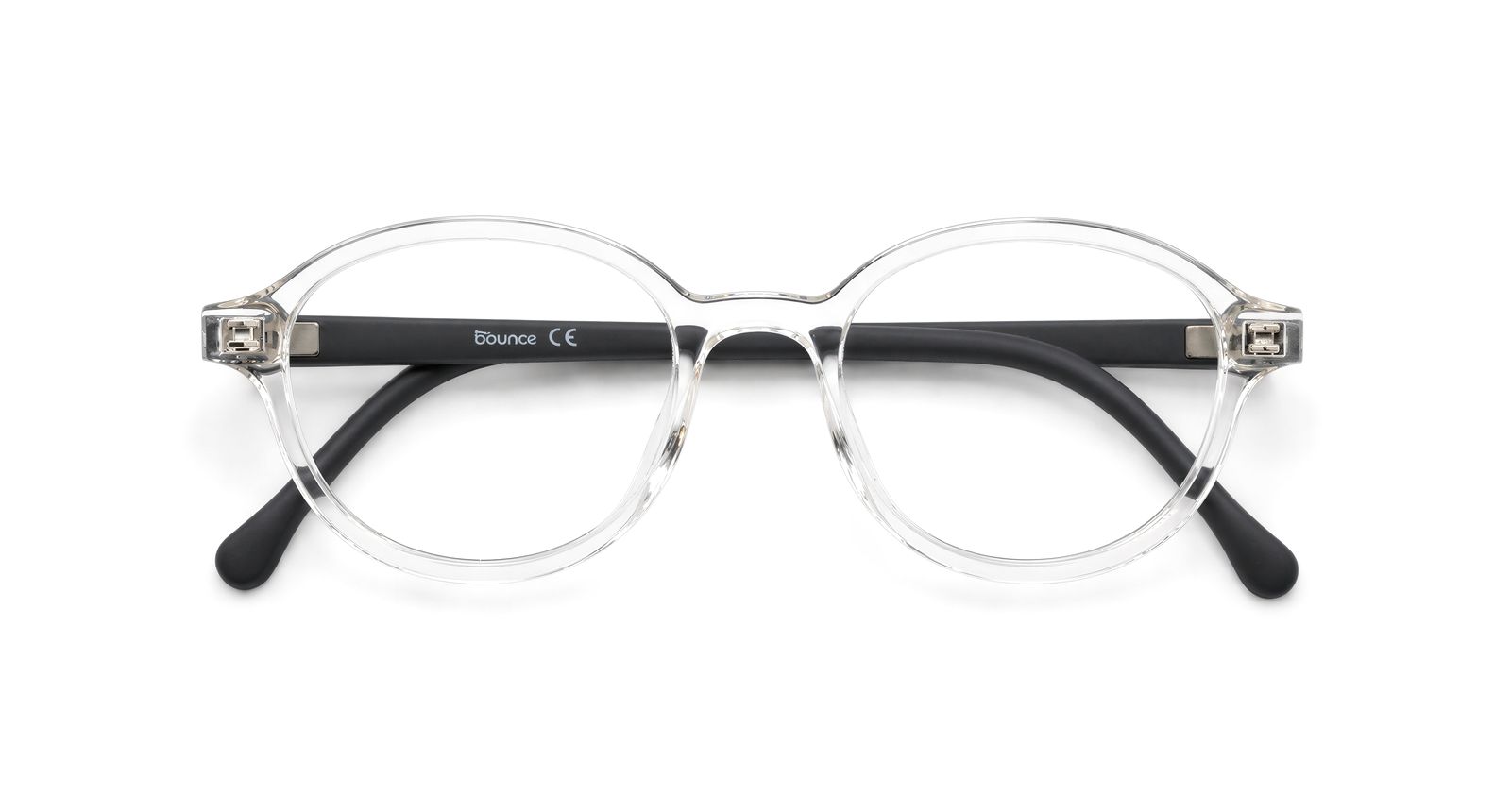
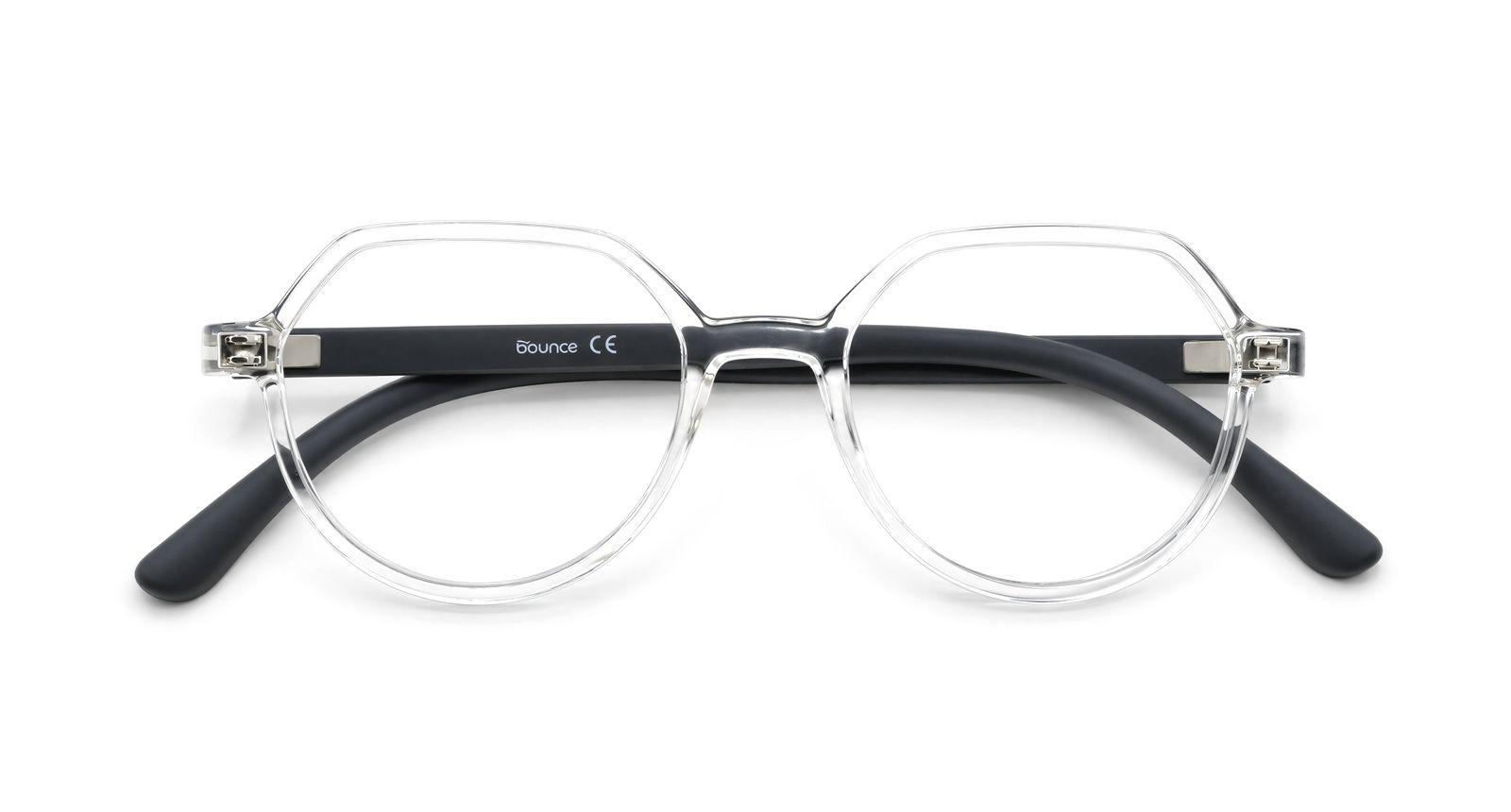
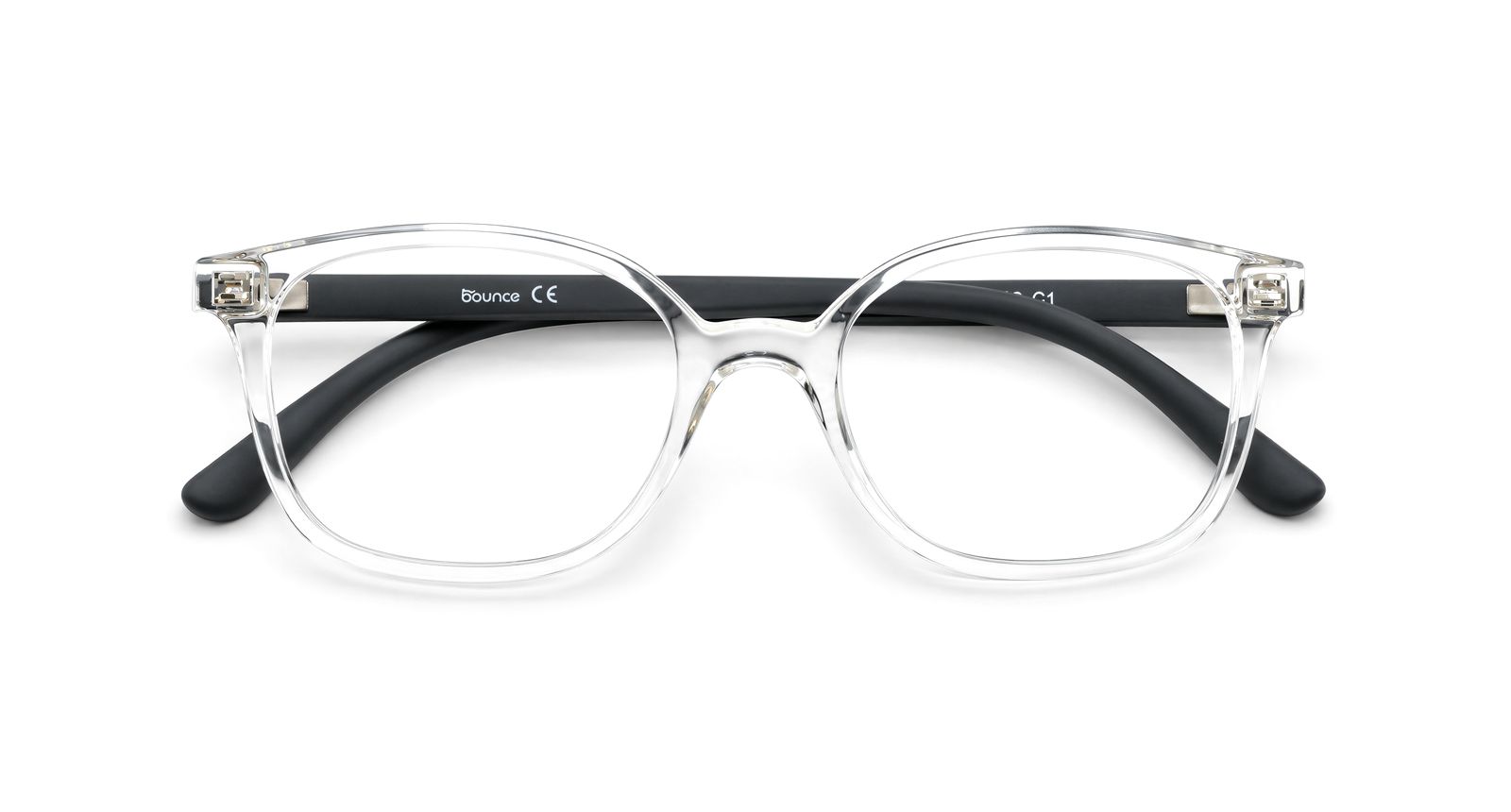
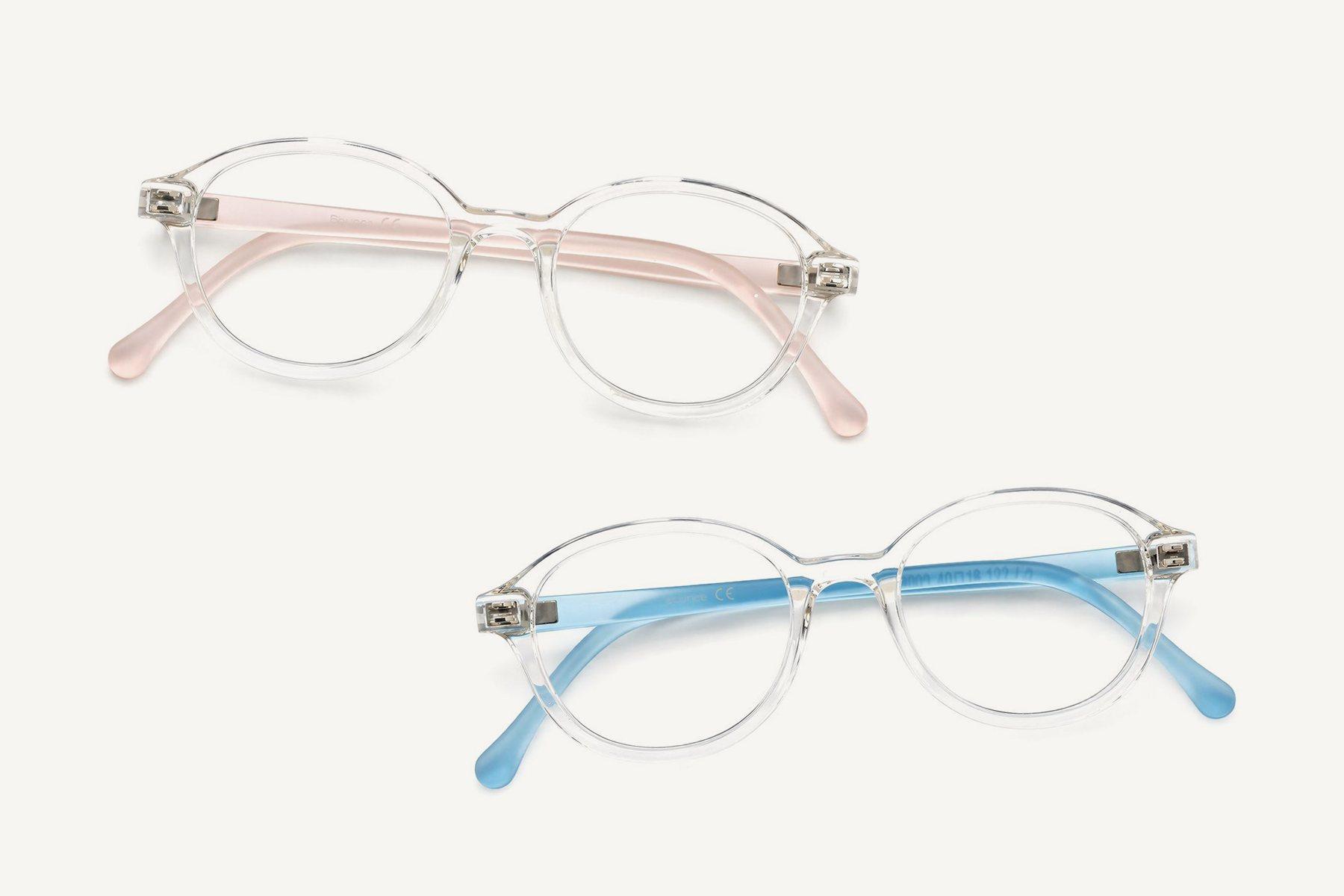
Our Bounce line is the same survivability argument made a size up. It is TR-90 — a memory thermoplastic that flexes hard and springs back rather than taking a set, which is why you cannot bend one out of shape and do not need to. What it adds is proper temples and hinges, which is what makes glasses sit rather than perch.
We do not make a hingeless one-piece and are not going to pretend the two are interchangeable.
The honest size limit
We start at a face of about 80mm measured temple to temple, which is around two years old and varies a lot between children. Below that we do not have the size, and no amount of flexible material changes that — a frame too wide for a face is too wide whether it bends or not.
If you are buying for a baby under that, a specialist infant frame is the right product and we would rather tell you so than sell you something that will not stay on. The size check takes a minute and will tell you which side of the line you are on before you spend anything.
What to actually look for
- Width first, material second. Every frame on the market fails the same way if it is the wrong width, and flexible ones fail it slightly faster.
- Ask what the material actually is. Soft one-piece, memory thermoplastic and ordinary plastic behave completely differently, and “flexible” gets used for all three.
- Check what happens when it breaks anyway. Toddlers find a way. What matters is what the replacement costs and how long it takes.
- Lenses, not just the frame. Polycarbonate is the impact-resistant material and it matters more on a small child than any frame decision — see the lens guide.
Common questions
- What are rubber glasses for kids?
- Usually a hingeless one-piece frame in a soft flexible plastic, held on with an elastic band rather than arms over the ears. They are made for babies and small toddlers, where there is not much ear to hook onto and everything gets pulled.
- Are flexible frames better for toddlers?
- For the very young, often yes — no hinges means nothing to snap and no screws to lose. From around the age where a frame can sit properly on the ears, a hinged frame in a memory material gives you the same survivability and a much better fit.
- Do you make rubber or hingeless glasses?
- No. Our Bounce line is TR-90, a memory thermoplastic that flexes hard and springs back rather than taking a set — the same survivability argument — but it has proper temples and hinges, which is what makes it fit rather than perch.
- What size does a baby need?
- We start at a face of about 80mm measured temple to temple, which is roughly two years old. Below that we are not the right shop, and a flexible frame from someone who specializes in infants is the better answer.